

What Is a Flange? Types & Selection
What Is a Flange?
Definition of Pipe Flange
A flange is a plate or ring that provides a mounting surface for connecting pipe sections or attaching pipes to valves, pumps, and other equipment. When bolted together with a gasket between them, flanges create a leak-proof seal.

Flanges are produced by casting or forging steel-in oil and gas applications, forged steel flanges are preferred for their superior strength.
Flange Parameters
| Parameter | Description | Selection Notes |
|---|---|---|
| Type & Specification | Shape/design: weld neck, slip-on, blind, threaded, lap joint. 13 types available | Specify American Standard B16.5, B16.47, EN 1092-1, JIS, or DIN |
| NPS | Nominal Pipe Size-standardized size designation | For WN/SW flanges, also specify pipe schedule |
| Pressure Class | Max allowable pressure at temperature: 150, 300, 600, 900, 1500, 2500 | Class determines flange thickness and bolt pattern |
| Facing Type | FF (flat face), RF (raised face), RTJ (ring joint) | RF is American Standard B16.5 default; RTJ for high P/T |
| Material Grade | A105 (CS), A182 F304/316 (SS), A182 F11/22 (alloy) | Must match pipe material and service conditions |
| Cathodic Protection | Flange isolation kits prevent galvanic corrosion | Required where dissimilar metals meet |
What Is a Flanged Joint?
A flanged joint connects two pipe sections or equipment by bolting flanges together with a gasket between them. Hundreds-even thousands-of flanged joints are required in a typical piping system.
| Component | Function |
|---|---|
| Flanges | Circular disks with bolt holes; welded or threaded to pipe ends |
| Gasket | Sealing element (rubber, graphite, PTFE, metal) between flanges |
| Bolts/Nuts | Compress the gasket to create a leak-proof seal |
| Advantage | Description |
|---|---|
| Leak-proof | Proper assembly prevents fluid/gas escape |
| Easy maintenance | Can be disassembled without cutting or welding |
| Flexibility | Accommodates slight misalignments |
| P/T tolerance | Designed for specific pressure and temperature conditions |
Connection types:
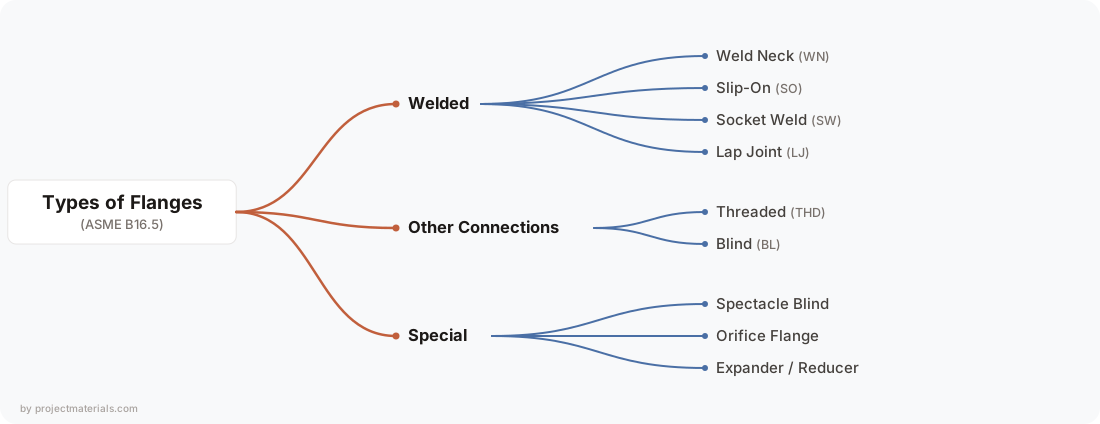
- Welded (WN, SW, SO, LJ): For high P/T applications and sizes >2”
- Threaded: For small diameters without vibration or thermal cycling

Flanges for Piping Systems
Standard flange types include welding neck, blind, socket weld, lap joint, and threaded. Special types include swivel, expander/reducer, Nipoflange/Weldoflange, and orifice flanges.
| Application | Recommended Flange Type |
|---|---|
| High P/T, permanent joints | Weld neck, slip-on, socket weld |
| Low pressure, no vibration | Threaded |
| Bolt alignment, cost savings on exotic alloys | Lap joint with stub end |
Flanges Specifications (American Standard, API, EN)
| Standard | Coverage | Sizes |
|---|---|---|
| American Standard B16.5 | Pipe flanges and flanged fittings | NPS 1/2 - 24, Class 150-2500 |
| American Standard B16.47 | Large diameter flanges (Series A & B) | NPS 26 - 60, Class 75-900 |
| American Standard B16.36 | Orifice flanges | Class 300-2500 |
| American Standard B16.48 | Spectacle blinds, spades, spacers | Class 150-2500 |
| American Standard B16.1 | Cast iron flanges | - |
| API 6A | Wellhead/Christmas tree equipment | Material classes AA-HH |
| API 6B/6BX | RTJ and extreme high-pressure flanges | - |
| EN 1092-1 | European pipe flanges | Type 01, 05, 11, 13 |
Design notes:
- MSS SP-44: Use for pipeline flanges with materials not listed in American Standard B16.5
- Unlisted materials: Design per American Standard Section VIII Div 1, Appendix 2
Material Specifications
| ASTM Standard | Material Type |
|---|---|
| A105 | Carbon steel (high temp) |
| A182 | Alloy and stainless steel |
| A350 | Low-temperature carbon steel |
Dimensional Tolerances
| Standard | Key Tolerances |
|---|---|
| American Standard B16.5/B16.47 | OD (±1.6mm for NPS 24), thickness, bore diameter, bolt hole spacing, surface finish |
| API 6A | PSL requirements, material classes, temperature ratings |
| API 6B/6BX | RTJ groove depth/width, pitch diameter, gasket surface finish |
Flange Materials
General Overview
Key material grades must match the pipe material:
| Application | Flange Material | Matching Pipe |
|---|---|---|
| High-temperature CS | ASTM A105 | A53, A106, API 5L |
| Low-temperature CS | ASTM A350 LF1/2/3 | A333 |
| High-yield CS (pipelines) | ASTM A694 | API 5L X42-X80 |
| Alloy steel | A182 F1 to F91 | A335 P-grades |
| Stainless steel | A182 F304/316/321 | A312 |
| Duplex/Super Duplex | A182 F51/F53/F55 | A790/A928 |
General requirements:
- Flanges shall be castings, forgings, or plates
- Bolting per American Standard B16.5, Table 1B
- Pipeline flanges: carbon equivalency per American Standard B31.4/B31.8
Material Selection by Service
| Material | Temperature Range | Notes |
|---|---|---|
| A105 (CS) | -29°C to 425°C | Standard high-temp CS |
| A350 LF2 (CS) | Below -29°C | Impact tested per B31.3 |
| A694 (High-yield CS) | - | Matches API 5L X42-X65 |
| A182 F11 (Alloy) | To 593°C | 1¼Cr-½Mo |
| A182 F5 (Alloy) | To 650°C | 5Cr-½Mo |
| Cast iron (A126 Cl.B) | - | Fire systems only; FF face required |
SS interchangeability: 304L/316L may substitute for 304/316 if physical requirements are met. Types 321 and 347 are compatible.
Flanges Marking Standard
Flange markings ensure traceability and proper selection. Required markings per American Standard/API:
| Marking | Information |
|---|---|
| Manufacturer | Name or trademark |
| Material | ASTM grade (e.g., A105, A182 F304) |
| Pressure Class | 150, 300, 600, 900, 1500, 2500 |
| Size | NPS or DN |
| Bore | If different from nominal |
| Heat Code | Traceability to material batch and test records |
| Standard | American Standard B16.5, B16.47, API 6A, etc. |
| Facing | RF, FF, RTJ (if applicable) |
| Special | ”NACE” for sour service (MR0175/ISO 15156) |
Flange Bolting Chart
Correct stud bolts and nuts are required for leak-free flange connections. The bolting chart below specifies the number, diameter, and length of bolts for each flange size and pressure class.
Bolting Chart (Class 150 to 600)
| NPS | CL 150 # Bolts | CL 150 Dia. | CL 150 Len. | CL 300 # Bolts | CL 300 Dia. | CL 300 Len. | CL 400 # Bolts | CL 400 Dia. | CL 400 Len. | CL 600 # Bolts | CL 600 Dia. | CL 600 Len. |
|---|---|---|---|---|---|---|---|---|---|---|---|---|
| 1/2 | 4 | 1/2 | 2 1/4 | 4 | 1/2 | 2 1/2 | 4 | 1/2 | 3 | 4 | 1/2 | 3 |
| 3/4 | 4 | 1/2 | 2 1/2 | 4 | 5/8 | 3 | 4 | 5/8 | 3 1/2 | 4 | 5/8 | 3 1/2 |
| 1 | 4 | 1/2 | 2 1/2 | 4 | 5/8 | 3 | 4 | 5/8 | 3 1/2 | 4 | 5/8 | 3 1/2 |
| 1 1/4 | 4 | 1/2 | 2 3/4 | 4 | 5/8 | 3 1/4 | 4 | 5/8 | 3 3/4 | 4 | 5/8 | 3 3/4 |
| 1 1/2 | 4 | 1/2 | 2 3/4 | 4 | 3/4 | 3 1/2 | 4 | 3/4 | 4 1/4 | 4 | 3/4 | 4 1/4 |
| 2 | 4 | 5/8 | 3 1/4 | 8 | 5/8 | 3 1/2 | 8 | 5/8 | 4 1/4 | 8 | 5/8 | 4 1/4 |
| 2 1/2 | 4 | 5/8 | 3 1/2 | 8 | 3/4 | 4 | 8 | 3/4 | 4 3/4 | 8 | 3/4 | 4 3/4 |
| 3 | 4 | 5/8 | 3 1/2 | 8 | 3/4 | 4 1/4 | 8 | 3/4 | 5 | 8 | 3/4 | 5 |
| 3 1/2 | 8 | 5/8 | 3 1/2 | 8 | 3/4 | 4 1/4 | 8 | 7/8 | 5 1/2 | 8 | 7/8 | 5 1/2 |
| 4 | 8 | 5/8 | 3 1/2 | 8 | 3/4 | 4 1/2 | 8 | 7/8 | 5 1/2 | 8 | 7/8 | 5 3/4 |
| 5 | 8 | 3/4 | 3 3/4 | 8 | 3/4 | 4 3/4 | 8 | 7/8 | 5 3/4 | 8 | 1 | 6 1/2 |
| 6 | 8 | 3/4 | 4 | 12 | 3/4 | 4 3/4 | 12 | 7/8 | 6 | 12 | 1 | 6 3/4 |
| 8 | 8 | 3/4 | 4 1/4 | 12 | 7/8 | 5 1/2 | 12 | 1 | 6 3/4 | 12 | 1 1/8 | 7 1/2 |
| 10 | 12 | 7/8 | 4 1/2 | 16 | 1 | 6 1/4 | 16 | 1 1/8 | 7 1/2 | 16 | 1 1/4 | 8 1/2 |
| 12 | 12 | 7/8 | 4 3/4 | 16 | 1 1/8 | 6 3/4 | 16 | 1 1/4 | 8 | 20 | 1 1/4 | 8 3/4 |
| 14 | 12 | 1 | 5 1/4 | 20 | 1 1/8 | 7 | 20 | 1 1/4 | 8 1/4 | 20 | 1 3/8 | 9 1/4 |
| 16 | 16 | 1 | 5 1/4 | 20 | 1 1/4 | 7 1/2 | 20 | 1 3/8 | 8 3/4 | 20 | 1 1/2 | 10 |
| 18 | 16 | 1 1/8 | 5 3/4 | 24 | 1 1/4 | 7 3/4 | 24 | 1 3/8 | 9 | 20 | 1 5/8 | 10 3/4 |
| 20 | 20 | 1 1/8 | 6 1/4 | 24 | 1 1/4 | 8 | 24 | 1 1/2 | 9 1/2 | 24 | 1 5/8 | 11 1/4 |
| 22 | 20 | 1 1/4 | 6 1/2 | 24 | 1 1/2 | 8 3/4 | 24 | 1 5/8 | 10 | 24 | 1 5/8 | 12 |
| 24 | 20 | 1 1/4 | 6 3/4 | 24 | 1 1/2 | 9 | 24 | 1 3/4 | 10 1/2 | 24 | 1 7/8 | 13 |
| NPS | CL 900 # Bolts | CL 900 Dia. | CL 900 Len. | CL 1500 # Bolts | CL 1500 Dia. | CL 1500 Len. | CL 2500 # Bolts | CL 2500 Dia. | CL 2500 Len. |
|---|---|---|---|---|---|---|---|---|---|
| 1/2 | 4 | 3/4 | 4 1/4 | 4 | 3/4 | 4 1/4 | 4 | 3/4 | 4 3/4 |
| 3/4 | 4 | 3/4 | 4 1/2 | 4 | 3/4 | 4 1/2 | 4 | 3/4 | 5 |
| 1 | 4 | 7/8 | 5 | 4 | 7/8 | 5 | 4 | 7/8 | 5 1/2 |
| 1 1/4 | 4 | 7/8 | 5 | 4 | 7/8 | 5 | 4 | 1 | 6 |
| 1 1/2 | 4 | 1 | 5 1/2 | 4 | 1 | 5 1/2 | 4 | 1 1/8 | 6 3/4 |
| 2 | 8 | 7/8 | 5 3/4 | 8 | 7/8 | 5 3/4 | 8 | 1 | 7 |
| 2 1/2 | 8 | 1 | 6 1/4 | 8 | 1 | 6 1/4 | 8 | 1 1/8 | 7 3/4 |
| 3 | 8 | 7/8 | 5 3/4 | 8 | 1 1/8 | 7 | 8 | 1 1/4 | 8 3/4 |
| 3 1/2 | - | - | - | - | - | - | - | - | - |
| 4 | 8 | 1 1/8 | 6 3/4 | 8 | 1 1/4 | 7 3/4 | 8 | 1 1/2 | 10 |
| 5 | 8 | 1 1/4 | 7 1/2 | 8 | 1 1/2 | 9 3/4 | 8 | 1 3/4 | 11 3/4 |
| 6 | 12 | 1 1/8 | 7 1/2 | 12 | 1 3/8 | 10 1/4 | 8 | 2 | 13 1/2 |
| 8 | 12 | 1 3/8 | 8 3/4 | 12 | 1 5/8 | 11 1/2 | 12 | 2 | 15 |
| 10 | 16 | 1 3/8 | 9 1/4 | 12 | 1 7/8 | 13 1/4 | 12 | 2 1/2 | 19 1/4 |
| 12 | 20 | 1 3/8 | 10 | 16 | 2 | 14 3/4 | 12 | 2 3/4 | 21 1/4 |
| 14 | 20 | 1 1/2 | 10 3/4 | 16 | 2 1/4 | 16 | - | - | - |
| 16 | 20 | 1 5/8 | 11 1/4 | 16 | 2 1/2 | 17 1/2 | - | - | - |
| 18 | 20 | 1 7/8 | 12 3/4 | 16 | 2 3/4 | 19 1/4 | - | - | - |
| 20 | 20 | 2 | 13 3/4 | 16 | 3 | 21 1/4 | - | - | - |
| 22 | - | - | - | - | - | - | - | - | - |
| 24 | 20 | 2 1/2 | 17 1/4 | 16 | 3 1/2 | 24 1/4 | - | - | - |
Flange Weights
Class 150
| NPS(Inches) | DN(mm) | FLANGE OD(mm) | THICKNESS(mm) | SLIP-ON(KGS) | WELD NECK (KGS) | BLIND FLANGE (KGS) |
|---|---|---|---|---|---|---|
| 1/ 2 | 15 | 88.9 | 11.2 | 0.4 | 0.5 | 0.4 |
| 3/ 4 | 20 | 98.6 | 12.7 | 0.6 | 0.7 | 0.6 |
| 1 | 25 | 108 | 14.2 | 0.8 | 1 | 0.9 |
| 1 1/ 4 | 32 | 117.3 | 15.7 | 1 | 1.3 | 1.2 |
| 1 1/ 2 | 40 | 127 | 17.5 | 1.3 | 1.7 | 1.5 |
| 2 | 50 | 152.4 | 19.1 | 2.1 | 2.6 | 2.4 |
| 2 1/ 2 | 65 | 177.8 | 22.4 | 3.3 | 4.1 | 3.9 |
| 3 | 80 | 190.5 | 23.9 | 3.9 | 4.9 | 4.9 |
| 3 1/ 2 | 90 | 215.9 | 23.9 | 4.8 | 6.1 | 6.2 |
| 4 | 100 | 228.6 | 23.9 | 5.3 | 6.8 | 7.0 |
| 5 | 125 | 254 | 23.9 | 6.1 | 8.6 | 8.6 |
| 6 | 150 | 279.4 | 25.4 | 7.5 | 10.6 | 11.3 |
| 8 | 200 | 342.9 | 28.4 | 12.1 | 17.6 | 19.6 |
| 10 | 250 | 406.4 | 30.2 | 16.5 | 24 | 28.6 |
| 12 | 300 | 482.6 | 31.8 | 26.2 | 36.5 | 43.2 |
| 14 | 350 | 533.4 | 35.1 | 34.6 | 48.4 | 58.1 |
| 16 | 400 | 596.9 | 36.6 | 44.8 | 60.6 | 76.1 |
| 18 | 450 | 635 | 39.6 | 48.9 | 68.3 | 93.7 |
| 20 | 500 | 698.5 | 42.9 | 61.9 | 84.5 | 122.0 |
| 24 | 600 | 812.8 | 47.8 | 86.9 | 115 | 185.0 |
Class 300
| NPS(Inches) | DN(mm) | FLANGE OD(mm) | THICKNESS(mm) | SLIP ON(KGS) | WELD NECK (KGS) | BLIND(KGS) |
|---|---|---|---|---|---|---|
| 1/ 2 | 15 | 95.3 | 14.2 | 0.6 | 0.8 | 0.6 |
| 3/ 4 | 20 | 117.3 | 15.7 | 1.1 | 1.3 | 1.1 |
| 1 | 25 | 124 | 17.5 | 1.4 | 1.5 | 1.4 |
| 1 1/ 4 | 32 | 133.4 | 19.1 | 1.7 | 2.0 | 1.8 |
| 1 1/ 2 | 40 | 155.5 | 20.6 | 2.5 | 2.9 | 2.7 |
| 2 | 50 | 165.1 | 22.4 | 2.9 | 3.4 | 3.2 |
| 2 1/ 2 | 65 | 190.5 | 25.4 | 4.3 | 5.2 | 4.9 |
| 3 | 80 | 215.9 | 28.4 | 5.9 | 6.9 | 6.8 |
| 3 1/ 2 | 90 | 228.6 | 30.2 | 7.3 | 8.7 | 8.7 |
| 4 | 100 | 254 | 31.8 | 9.6 | 11.2 | 11.5 |
| 5 | 125 | 279.4 | 35.1 | 12.3 | 15.1 | 15.6 |
| 6 | 150 | 317.5 | 36.6 | 15.6 | 19.1 | 20.9 |
| 8 | 200 | 381 | 41.1 | 24.2 | 29.9 | 34.3 |
| 10 | 250 | 444.5 | 47.6 | 34.1 | 42.7 | 53.3 |
| 12 | 300 | 520.7 | 50.8 | 49.8 | 61.8 | 78.8 |
| 14 | 350 | 584.2 | 53.8 | 69.9 | 85.8 | 105.0 |
| 16 | 400 | 647.7 | 57.2 | 88.1 | 106.0 | 137.0 |
| 18 | 450 | 711.2 | 60.5 | 109.0 | 131.0 | 175.0 |
| 20 | 500 | 774.7 | 63.5 | 134.0 | 158.0 | 221.0 |
| 24 | 600 | 914.4 | 70.0 | 201.0 | 230.0 | 339.0 |
Class 600
| NPS(Inches) | DN(mm) | FLANGE OD(mm) | THICKNESS(mm) | SLIP-ON(KGS) | WELD NECK (KGS) | BLIND(KGS) |
|---|---|---|---|---|---|---|
| 1/ 2 | 15 | 95.3 | 14.2 | 0.7 | 0.9 | 0.8 |
| 3/ 4 | 20 | 117.3 | 15.7 | 1.3 | 1.5 | 1.3 |
| 1 | 25 | 124.0 | 17.5 | 1.5 | 1.8 | 1.6 |
| 1 1/ 4 | 32 | 133.4 | 20.6 | 2 | 2.5 | 2.2 |
| 1 1/ 2 | 40 | 155.4 | 22.4 | 3 | 3.5 | 3.3 |
| 2 | 50 | 165.1 | 25.4 | 3.6 | 4.4 | 4.2 |
| 2 1/ 2 | 65 | 190.5 | 28.4 | 5.3 | 6.4 | 6.1 |
| 3 | 80 | 209.6 | 31.8 | 7 | 8.5 | 8.4 |
| 3 1/ 2 | 90 | 228.6 | 35.1 | 8.8 | 10.7 | 11 |
| 4 | 100 | 273.1 | 38.1 | 14.5 | 17.4 | 17.3 |
| 5 | 125 | 330.2 | 44.5 | 24.4 | 29.2 | 29.4 |
| 6 | 150 | 355.6 | 47.8 | 28.7 | 34.9 | 36.1 |
| 8 | 200 | 419.1 | 55.6 | 43.4 | 53.9 | 58.9 |
| 10 | 250 | 508 | 63.5 | 70.3 | 86.5 | 97.5 |
| 12 | 300 | 558.8 | 66.5 | 84.2 | 103.0 | 124 |
| 14 | 350 | 603.3 | 69.9 | 98.7 | 122.0 | 151 |
| 16 | 400 | 685.8 | 76.2 | 142.0 | 170.0 | 214 |
| 18 | 450 | 743 | 82.6 | 173.0 | 204.0 | 272 |
| 20 | 500 | 812.8 | 88.9 | 220.0 | 254.0 | 349.0 |
| 24 | 600 | 939.8 | 101.6 | 312.0 | 358.0 | 533.0 |
Class 900
| NPS(Inches) | DN(mm) | FLANGE OD(mm) | THICKNESS(mm) | SLIP-ON(KGS) | WELD NECK (KGS) | BLIND(KGS) |
|---|---|---|---|---|---|---|
| 1/ 2 | 15 | 120.7 | 22.4 | 1.8 | 1.9 | 1.8 |
| 3/ 4 | 20 | 130 | 25.4 | 2.4 | 2.6 | 2.4 |
| 1 | 25 | 149.4 | 28.4 | 3.6 | 3.7 | 3.6 |
| 1 1/ 4 | 32 | 158.8 | 28.4 | 4 | 4.3 | 4.1 |
| 1 1/ 2 | 40 | 177.8 | 31.8 | 5.5 | 5.9 | 5.8 |
| 2 | 50 | 215.9 | 38.1 | 10.2 | 10.8 | 10 |
| 2 1/ 2 | 65 | 244.3 | 41.1 | 13.9 | 15 | 14 |
| 3 | 80 | 241.3 | 38.1 | 11.6 | 13.7 | 13.1 |
| 4 | 100 | 292.1 | 44.5 | 19.7 | 22.5 | 26.9 |
| 5 | 125 | 349.3 | 50.8 | 31.9 | 37.4 | 36.5 |
| 6 | 150 | 381 | 55.6 | 41.1 | 47.7 | 47.4 |
| 8 | 200 | 469.9 | 63.5 | 70.7 | 81.3 | 82.5 |
| 10 | 250 | 546.1 | 69.9 | 101.0 | 119 | 122.0 |
| 12 | 300 | 609.6 | 79.2 | 133.0 | 157.0 | 173.0 |
| 14 | 350 | 641.4 | 85.6 | 153.0 | 180.0 | 206.0 |
| 16 | 400 | 704.9 | 88.9 | 185.0 | 217.0 | 259.0 |
| 18 | 450 | 787.4 | 101.6 | 258.0 | 292.0 | 367.0 |
| 20 | 500 | 857.3 | 108.0 | 317.0 | 362.0 | 463.0 |
| 24 | 600 | 1041.4 | 139.7 | 606.0 | 665.0 | 876.0 |
Class 1500
| NPS(Inches) | DN(mm) | FLANGE OD(mm) | THICKNESS(mm) | SLIP-ON(KGS) | WELD NECK (KGS) | BLIND(KGS) |
|---|---|---|---|---|---|---|
| 1/ 2 | 15 | 120.7 | 22.4 | 1.8 | 1.9 | 1.8 |
| 3/ 4 | 20 | 130 | 25.4 | 2.4 | 2.6 | 2.4 |
| 1 | 25 | 149.4 | 28.4 | 3.6 | 3.7 | 3.6 |
| 1 1/ 4 | 32 | 158.8 | 28.4 | 4 | 4.3 | 4.1 |
| 1 1/ 2 | 40 | 177.8 | 31.8 | 5.5 | 5.9 | 5.8 |
| 2 | 50 | 215.9 | 38.1 | 10.2 | 10.8 | 10.1 |
| 2 1/ 2 | 65 | 244.3 | 41.1 | 13.9 | 15 | 14 |
| 3 | 80 | 266.7 | 47.8 | 19.9 | 19.1 | |
| 4 | 100 | 311.2 | 53.8 | 29.9 | 29.9 | |
| 5 | 125 | 374.7 | 73.2 | 55.4 | 58.4 | |
| 6 | 150 | 393.7 | 82.6 | 68.4 | 71.8 | |
| 8 | 200 | 482.6 | 91.9 | 117 | 122 | |
| 10 | 250 | 584.2 | 108 | 194.0 | 210.0 | |
| 12 | 300 | 673.1 | 124 | 288.0 | 316.0 | |
| 14 | 350 | 749.3 | 133.4 | 380.0 | 420 | |
| 16 | 400 | 825.5 | 146.1 | 485.0 | 558.0 | |
| 18 | 450 | 914.4 | 162.1 | 644.0 | 760.0 | |
| 20 | 500 | 984.3 | 177.8 | 775.0 | 965.0 | |
| 24 | 600 | 1168.4 | 203.2 | 1232.0 | 1558.0 |
Class 2500
| NPS(Inches) | DN(mm) | FLANGE OD(mm) | THICKNESS(mm) | SLIP-ON(KGS) | WELD NECK (KGS) |
|---|---|---|---|---|---|
| 1/ 2 | 15 | 133.4 | 30.2 | 3.1 | 3.0 |
| 3/ 4 | 20 | 139.7 | 31.8 | 3.7 | 3.5 |
| 1 | 25 | 158.8 | 35.1 | 5.2 | 5.0 |
| 1 1/ 4 | 32 | 184.2 | 38.1 | 7.7 | 7.4 |
| 1 1/ 2 | 40 | 203.2 | 44.5 | 10.9 | 10.4 |
| 2 | 50 | 235 | 50.8 | 16.2 | 15.6 |
| 2 1/ 2 | 65 | 266.7 | 57.2 | 23.7 | 22.6 |
| 3 | 80 | 304.8 | 66.5 | 36.2 | 34.8 |
| 4 | 100 | 355.6 | 76.2 | 55.3 | 53.9 |
| 5 | 125 | 419.1 | 91.9 | 92.5 | 90.8 |
| 6 | 150 | 482.6 | 108 | 143.0 | 141 |
| 8 | 200 | 552.5 | 127 | 215.0 | 214 |
| 10 | 250 | 673.1 | 165.1 | 406.0 | 411.0 |
| 12 | 300 | 762 | 184.2 | 572.0 | 592.0 |
Watch the Video

Frequently Asked Questions
What is a pipe flange?
A flange is a plate or ring that connects pipe sections or attaches pipes to valves, pumps, and equipment. When bolted together with a gasket between them, flanges create a leak-proof, demountable joint. They are manufactured per American Standard B16.5 (NPS 1/2 to 24) or American Standard B16.47 (NPS 26 to 60).
What are the main types of flanges?
The six main flange types are: Weld Neck (best for high pressure, with a tapered hub for stress distribution), Slip-On (slides over pipe, fillet welded), Blind (closes pipe ends or vessel nozzles), Socket Weld (small bore, high pressure), Threaded (no welding required, for non-critical service), and Lap Joint (used with stub ends for easy alignment and disassembly).
What does flange class 150, 300, 600 mean?
Flange class (150, 300, 600, 900, 1500, 2500) indicates the pressure-temperature rating per American Standard B16.5. Higher class = higher pressure capacity. Class 150 handles ~285 psi at ambient, Class 300 ~740 psi, Class 600 ~1480 psi. The actual allowable pressure depends on the flange material and operating temperature ; it decreases as temperature increases, following the P-T rating tables.
What is the difference between RF and RTJ flange faces?
RF (Raised Face) is the most common face type, used with spiral wound or sheet gaskets, suitable for applications up to Class 600. RTJ (Ring Type Joint) has a machined groove for metal ring gaskets and is used for high-pressure (Class 600 and above) and high-temperature applications that require metal-to-metal sealing for maximum leak resistance.
What flange material should I use?
Common materials: A105 (carbon steel, standard temperature), A350 LF2 (carbon steel, low temperature down to -46°C), A182 F304/F316 (stainless steel for corrosion resistance), A182 F11/F22 (alloy steel for high temperature), A182 F51/F53 (duplex/super duplex for corrosive and high-strength service). Selection depends on the process fluid, temperature range, and corrosion requirements.
Leave a Comment
Have a question or feedback? Send us a message.
Previous Comments
It's good to know that flanges can help me join two of my boat's pipes together. I think I'll buy a watertight stainless square flange from a good supplier and see if they have other special types of flanges that I can buy. Since I need a flange for high-pressure applications, I'll have to make sure that they're compatible with the pipes that I want to bind.
This is really a great blog and I really appreciate the content.
flanges really helps to join pipes together, great and informative blog but in market there are lot of suppliers of flanges can you suggest me the parameters to find the best quality. ma flanges
Hi, can I ask where do I find " flanch bolt chart"? cause I couldn't find that in American Standard B16.5
This is very informative. Thank you.