

Pipe Inspection Methods & Tests
Pipe Inspections
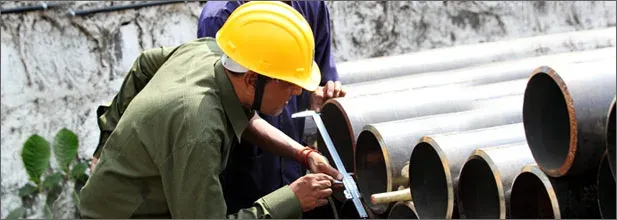 Pipes Inspection
Pipe inspection verifies that newly manufactured pipes are fit for their intended purpose, capable of safely handling operational demands and compliant with applicable standards and specifications. Every pipe entering an oil and gas facility, power plant, or chemical processing plant must pass a defined set of tests before acceptance.
Why Inspection Matters
| Reason | Benefit |
|---|---|
| Safety assurance | Detects hazards before catastrophic failures |
| Regulatory compliance | Meets industry codes; avoids fines and shutdowns |
| System reliability | Identifies issues before they escalate |
| Performance verification | Confirms design flow rates and pressure ratings |
| Lifecycle extension | Early defect detection reduces maintenance costs |
| Contractual obligation | Satisfies purchase order and project specification requirements |
Standard Inspections per American Standard/API
| Category | Tests | What’s Checked |
|---|---|---|
| Visual | Surface inspection | Dents, scratches, laminations, weld seam integrity, straightness, roundness |
| Dimensional | OD, ID, WT, length | Compliance with American Standard B36.10/B36.19 tolerances |
| NDT | RT, UT, MPI, DPI | Internal flaws, weld defects, surface cracks |
| Mechanical | Tensile, Charpy, hardness | Strength, toughness, wear resistance |
| Metallurgical | Chemical analysis, microstructure | Alloy composition, grain size |
| Pressure | Hydrostatic test | Leak-tightness at design pressure |
| Marking | Stencil/stamp verification | Manufacturer, grade, size, heat number |
| Documentation | MTC review | EN 10204 certification with all test results |
Inspection Scope: Full vs. Sample
| Approach | Tests | Frequency |
|---|---|---|
| 100% inspection | Visual, dimensional, UT for wall thickness, hydrostatic | Every pipe |
| Sample inspection | Tensile, Charpy impact, chemical analysis, microstructure | Per heat/batch |
Sampling rates are defined by applicable standards (API, ASTM, American Standard). For critical applications or high-spec orders, sample testing frequency may increase, or every pipe may be tested. Sampling rates can be negotiated with the client.
Pipe inspection verifies compliance with standards across five areas: visual (surface defects), dimensional (OD, ID, WT, length), metallurgical (chemical composition, microstructure), mechanical (tensile, impact, hardness), and pressure (hydrostatic testing). For critical applications, define witness and hold points in the Inspection Test Plan before the order is placed; not after.
Mill Inspection vs Third-Party vs Site Inspection
Pipe inspection occurs at three distinct locations, each with a different scope and purpose.
Mill Inspection (Manufacturer QC)
Mill inspection is performed by the pipe manufacturer’s own quality control department as part of the standard production process. The mill’s QC team follows internal procedures based on the applicable product standard (API 5L, ASTM A106, ASTM A312, etc.) and the customer purchase order.
Mill inspection covers:
- Raw material verification (incoming steel plate, billet, or coil)
- In-process checks during forming and welding
- Heat treatment verification (temperature, soak time, cooling rate)
- All required mechanical and chemical testing
- Final visual and dimensional inspection
- Hydrostatic testing
- Marking and documentation
Third-Party Inspection (TPI)
Independent inspection agencies (Lloyd’s, SGS, DNV, Bureau Veritas, Cotecna, TUV) provide impartial verification for critical applications. The third-party inspector works on behalf of the buyer, witnessing tests and reviewing documentation at the manufacturer’s facility.
| Scenario | Why Third-Party |
|---|---|
| High-stakes applications | Oil & gas, nuclear, where failure consequences are severe |
| Regulatory requirements | Some jurisdictions mandate independent verification |
| Contract specifications | Client or project manager stipulates third-party witness |
| Certification | American Standard, API stamps require independent verification |
| International trade | Builds trust across borders; facilitates customs clearance |
| Specialized expertise | Testing capabilities manufacturer lacks in-house |
Site (Receiving) Inspection
Site inspection is performed when pipes arrive at the fabrication yard, construction site, or warehouse. It serves as the final quality gate before pipes enter the piping system.
| Check | Purpose |
|---|---|
| Visual inspection | Detect transport damage (dents, scratches, bent ends, coating damage) |
| Dimensional spot-check | Verify OD, WT, and length against PO |
| Marking verification | Confirm stencils match MTC and purchase order |
| MTC review | Verify all test results meet specification requirements |
| PMI (if required) | Positive Material Identification confirms alloy composition |
| Quantity count | Reconcile delivered quantity against packing list |
Inspection Stages: Pre-Production to Shipping
Pipe manufacturing inspection follows four stages, each with defined activities and checkpoints.
Stage 1: Pre-Production
| Activity | Details |
|---|---|
| ITP review and approval | Agree on inspection and test plan with all parties |
| Raw material certificates | Verify incoming steel (plate, billet, coil) MTCs |
| Chemical analysis | Confirm heat analysis meets grade requirements |
| Welding procedure review | Approve WPS/PQR for welded pipe production |
| Calibration records | Verify all testing equipment is calibrated and current |
Stage 2: In-Process
| Activity | Details |
|---|---|
| Forming verification | Monitor pipe forming (piercing, rolling, or plate bending) |
| Welding monitoring | Verify weld parameters match approved WPS |
| Heat treatment witness | Confirm temperature, hold time, and cooling method |
| In-process NDT | UT of weld seam, lamination check on plate |
| Dimensional spot-checks | OD, WT at intervals during production run |
Stage 3: Final Inspection
| Activity | Details |
|---|---|
| Visual inspection (100%) | Every pipe checked for surface defects |
| Dimensional inspection (100%) | OD, WT, length, straightness, end prep on every pipe |
| NDT (as required) | Full-body UT, weld seam RT/UT per specification |
| Hydrostatic test (100%) | Every pipe pressure-tested |
| Mechanical testing (per heat) | Tensile, impact, hardness on sample pipes |
| Marking verification | Stencils match specification and PO requirements |
| MTC preparation | Compile all test results into certificate |
Stage 4: Shipping Inspection
| Activity | Details |
|---|---|
| Coating/protection | Verify end caps, coating, corrosion inhibitor applied |
| Bundle/crate inspection | Proper stacking, dunnage, and securing |
| Packing list verification | Quantity, sizes, heat numbers match documentation |
| Loading supervision | Prevent handling damage during truck/vessel loading |
Types of Pipe Inspections
Visual Inspection (VI)
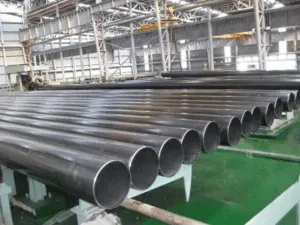 HFW Pipes
Visual inspection is the first step in any inspection regime: quick, cost-effective, and often sufficient to identify obvious defects requiring further investigation.
| Aspect | What’s Checked |
|---|---|
| Surface condition | Cracks, dents, scratches, laminations, tears |
| Weld quality | Uniformity, porosity, undercut, incomplete penetration |
| Coating/insulation | Integrity of protective coatings |
| Markings | Grade, size, manufacturer, heat number |
| Deformation | Bends, bulges, ovality |
Tools: Flashlights, mirrors, magnifying glasses, borescopes/cameras for internal inspection.
Limitations: Surface defects only; VI cannot detect subsurface or internal flaws. American Standard/API/ASTM define acceptable defect criteria.
Dimensional Inspection
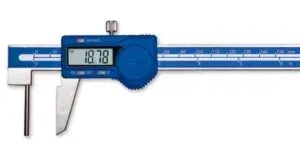
Dimensional inspection verifies pipe geometry against American Standard B36.10/B36.19 or API 5L tolerances.
| Dimension | Why It Matters | Tolerance Source |
|---|---|---|
| OD | Fit with fittings, flanges, equipment | American Standard B36.10/B36.19, API 5L |
| ID | Flow capacity and resistance | Calculated from OD and WT |
| Wall thickness | Pressure rating, mechanical strength | American Standard B36.10/B36.19, API 5L |
| Length | Logistics, installation planning | Per order specification |
| Straightness | Alignment and connection integrity | ~1 mm/m typical; ASTM A312M: 3.2 mm/3 m for SS |
| Ovality | Connection sealing, flow characteristics | Per applicable standard |
| End preparation | Weld bevel angle and root face dimensions | American Standard B16.25 (37.5 deg standard bevel) |
| End squareness | Proper fit-up during field welding | Per applicable standard |
Measurement tools: Calipers, micrometers, UT (wall thickness), laser scanning (roundness/straightness), tape measures (length), bevel gauges (end prep), pi tapes (circumferential OD).
Mechanical Testing
Mechanical testing permanently alters samples to determine material behavior under extreme conditions. Results are documented in Mill Test Certificates.
| Test | What’s Measured | Application |
|---|---|---|
| Tensile | Yield strength, tensile strength, elongation, reduction of area | All pipes |
| Hardness (Rockwell, Brinell, Vickers) | Resistance to indentation | All pipes; max 22 HRC for sour service (NACE MR0175) |
| Impact (Charpy V-notch) | Toughness at specified temperature | Low-temp service, API 5L PSL2, critical applications |
| Bend | Ductility, weld quality | Welded pipes (transverse guided bend) |
| Flattening | Ductility, soundness of weld and base metal | Seamless and welded pipes |
| Drop weight tear (DWTT) | Fracture propagation resistance | Large-diameter pipeline (API 5L, high grades) |
Tensile Testing
Tensile testing is the most fundamental mechanical test. A machined specimen is pulled to failure to measure:
- Yield strength (Rt0.5 or Fy): Stress at which permanent deformation begins
- Ultimate tensile strength (Rm or Fu): Maximum stress before necking
- Elongation (A%): Ductility measure, expressed as percentage of original length at fracture
- Reduction of area (Z%): Cross-section reduction at fracture point
Specimens are taken longitudinally (body) and transversely (weld) per the applicable standard. API 5L PSL2 requires both body and weld transverse tensile tests.
Impact Testing (Charpy V-Notch)
Charpy testing measures the energy a material absorbs before fracturing at a specific temperature. A notched specimen is struck by a pendulum, and the absorbed energy (Joules) is recorded.
| Standard | Typical Test Temperature | Minimum Energy |
|---|---|---|
| API 5L PSL2 | Per supplementary requirement or 0 deg C default | Grade-dependent (e.g., 27 J min for body, 20 J min for weld) |
| ASTM A333 Gr.6 | -46 deg C | 18 J average |
| ASTM A106 | Not mandatory (unless specified) | Per PO requirement |
| NACE MR0175 | Service temperature | Per applicable part of ISO 15156 |
Hardness Testing
Hardness is measured using Vickers (HV), Brinell (HBW), or Rockwell (HRC) methods. Hardness values verify that heat treatment achieved the correct microstructure and are critical for sour service compliance.
| Material | Max Hardness | Standard |
|---|---|---|
| Carbon steel (sour service) | 22 HRC / 248 HBW / 250 HV10 | NACE MR0175 / ISO 15156 |
| API 5L PSL2 (most grades) | 250 HV10 | API 5L Table 6 |
| Duplex SS | 36 HRC (typical) | ASTM A789/A790 |
| Austenitic SS | 22 HRC (sour) / no limit (sweet) | NACE MR0175 / ASTM A312 |
Chemical Analysis
Chemical analysis verifies that the steel composition matches the specified grade. Two levels of analysis exist:
| Type | Sample Source | When |
|---|---|---|
| Heat (ladle) analysis | Molten steel during casting | Steel mill provides with MTC |
| Product analysis | Finished pipe specimen | Mandatory for API 5L PSL2; optional for PSL1 |
Key elements checked include carbon (C), manganese (Mn), phosphorus (P), sulfur (S), silicon (Si), chromium (Cr), nickel (Ni), molybdenum (Mo), vanadium (V), niobium (Nb), titanium (Ti), copper (Cu), nitrogen (N), and boron (B). The carbon equivalent (CE) is calculated to predict weldability.
| CE Formula | Application | Max CE (typical) |
|---|---|---|
| CE(IIW) = C + Mn/6 + (Cr+Mo+V)/5 + (Ni+Cu)/15 | API 5L (C > 0.12%) | 0.43 for X65 PSL2 |
| CE(Pcm) = C + Si/30 + (Mn+Cu+Cr)/20 + Ni/60 + Mo/15 + V/10 + 5B | API 5L (C <= 0.12%) | 0.25 for X65 PSL2 |
Metallurgical Inspection

Metallurgical inspection evaluates material properties and microstructure to verify compliance with specifications and detect defects that could cause in-service failures.
Micro-Metallurgical Tests
| Test | Purpose | Application |
|---|---|---|
| Chemical composition (OES, XRF) | Verify alloy matches specified grade | All materials |
| Ferrite content | Balance of phases for strength/corrosion resistance | Duplex, austenitic SS |
| HIC testing | Resistance to hydrogen-induced cracking | Sour service (H2S environments) |
| SSC testing | Resistance to sulfide stress corrosion cracking | Sour service |
| Grain size | Affects strength, toughness, creep resistance | All steels |
| IGC testing (ASTM A262) | Resistance to intergranular corrosion | Stainless steels |
Macro-Metallurgical Analysis
Macro examination uses low magnification (up to 100x) or naked eye to assess:
| Aspect | What’s Examined |
|---|---|
| Weld quality | Discontinuities, misalignment, incomplete penetration |
| Heat treatment | Uniformity of grain structure across treated zones |
| Grain structure | Size and distribution (affects mechanical properties) |
| Defects | Cracks, porosity, slag inclusions, laminations |
| Corrosion | External/internal attack patterns (service pipes) |
Techniques: Visual inspection, stereomicroscopy, chemical etching (reveals weld zones, HAZ, grain boundaries), photographic documentation.
Surface Condition and Defect Acceptance Criteria
Pipe surface quality is governed by the applicable product standard. Defects that exceed acceptance criteria must be repaired (by grinding) or the pipe must be rejected.
| Defect Type | Acceptance Criteria (Typical) |
|---|---|
| Dents | Depth <= 6.35 mm and length <= 50% of OD (API 5L) |
| Scratches / gouges | Remaining WT above minimum; no sharp-bottomed defects |
| Laminations | Not acceptable at pipe ends (within 100 mm); body laminations per standard |
| Cracks | Not acceptable; any crack is cause for rejection |
| Hard spots | Not acceptable per API 5L (PSL2: max 35 HRC) |
| Weld defects | Per applicable NDT acceptance criteria (American Standard, API) |
| Arc strikes | Not acceptable on pressure-containing surfaces; must be ground and NDE verified |
Destructive Testing

Destructive testing permanently alters samples to determine material behavior under extreme conditions. Results are documented in Mill Test Certificates.
| Test | What’s Measured | Application |
|---|---|---|
| Tensile | Yield strength, tensile strength, elongation, reduction of area | All pipes |
| Hardness (Rockwell, Brinell, Vickers) | Resistance to indentation | All pipes |
| Impact (Charpy, Izod) | Toughness at specified temperature | Low-temp service, critical applications |
| Bend | Ductility, weld quality | Welded pipes |
| Flattening | Ductility, soundness | Seamless and welded pipes |
| Burst | Ultimate pressure resistance | Design verification |
| Chemical analysis | Alloy composition | All pipes |
Non-Destructive Testing (NDT)
NDT evaluates pipe properties without causing damage. See Non-Destructive Testing Types for detailed coverage of VI, LP, MP, UT, RT, and EC methods.
Hydrostatic Testing
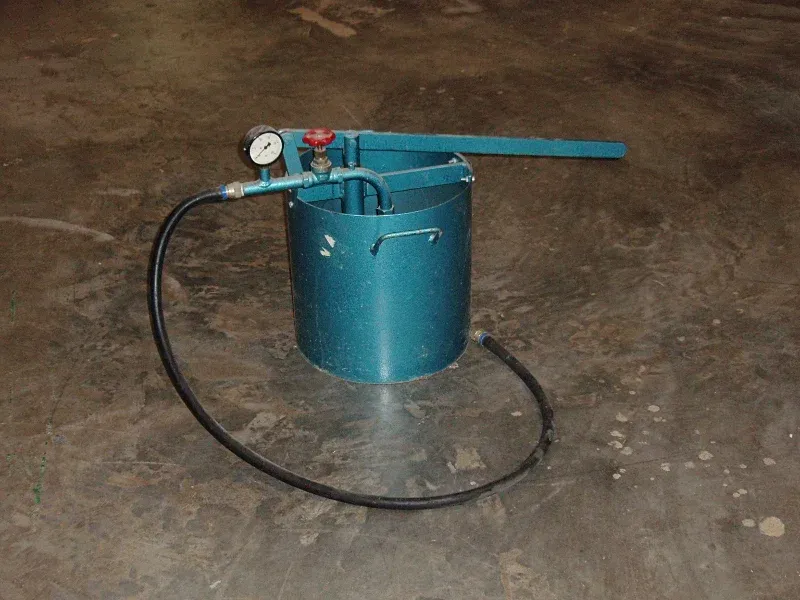 Pressure testing pump for hydrostatic tests
The hydrostatic test fills pipes with water and pressurizes above design pressure to verify strength and leak-tightness. See Hydrostatic Test for complete procedures and standards.
Marking and Traceability
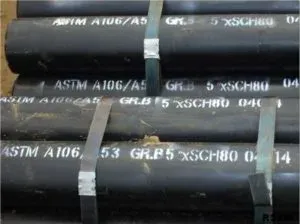 Api pipes multiple marking
Marking inspection verifies that pipe stencils/stamps match specifications and enable full traceability from heat of steel to installed location.
Required Marking Elements
| Marking Element | Purpose | Example |
|---|---|---|
| Manufacturer | Source identification | Mill name or logo |
| Material grade | ASTM/API specification compliance | API 5L Gr. X65 PSL2 |
| Size | NPS x Schedule or OD x WT | 12” x SCH 40 or 323.8 x 9.53 |
| Heat number | Traceability to MTC and batch | A7823 |
| Standard | Applicable specification | API 5L, ASTM A106, ASTM A312 |
| Pipe type | Manufacturing process | S (seamless), E (ERW), L (LSAW) |
| Test pressure | Hydrostatic test pressure applied | 250 bar |
| TPI stamp | Third-party inspector verification | Agency logo/stamp |
Marking Methods
| Method | Application | Notes |
|---|---|---|
| Stenciling (paint) | Standard for most pipe | White or yellow paint; must remain legible |
| Die stamping | Pipe ends, thick wall pipe | Low-stress stamps only; not permitted on thin wall (< 4 mm) |
| Color coding | Grade identification bands | Supplementary to stenciling |
| Labels/tags | Bundled small-bore pipe | Must be securely attached |
Verification process: Visual inspection of markings, comparison against PO/MR specs, cross-reference with MTC, documentation of findings, and rectification of discrepancies.
Third-Party Inspection (TPI) and the Inspection Test Plan (ITP)
The Role of the Third-Party Inspector
The third-party inspector (TPI) acts as the buyer’s representative at the manufacturer’s facility. The TPI does not perform tests; the manufacturer’s lab performs testing while the TPI witnesses the process, verifies procedures, reviews results, and signs off on compliance.
Key TPI responsibilities:
- Review and approve the Inspection Test Plan (ITP) before production
- Witness tests at agreed hold and witness points
- Verify calibration of testing equipment
- Review MTCs and test reports for compliance
- Issue inspection release notes (IRN) for shipment
- Report non-conformances and verify corrective actions
Inspection Test Plan (ITP) Structure
The ITP is the master document governing all inspection activities. It is prepared by the manufacturer, reviewed by the TPI agency, and approved by the buyer before production begins.
| ITP Column | Description |
|---|---|
| Activity | Description of the inspection/test step |
| Reference standard | Applicable code or specification |
| Acceptance criteria | Pass/fail limits |
| Manufacturer | QC activity level (Perform, Record, Certify) |
| TPI | Hold (H), Witness (W), Review (R), Monitor (M) |
| Client | Hold (H), Witness (W), Review (R), Monitor (M) |
| Frequency | 100%, per heat, per lot, per shift |
Hold, Witness, Review, and Monitor Points
| Code | Meaning | Production Impact |
|---|---|---|
| H (Hold) | Inspector must be present; work stops until released | Production halted until sign-off |
| W (Witness) | Inspector invited; production continues if absent after notice | 24-48 hour notification typical |
| R (Review) | Inspector reviews documentation after the fact | No production delay |
| M (Monitor) | Inspector monitors activity periodically | No production delay |
Comparison of Tests by Pipe Specification
| Test | API 5L PSL1 | API 5L PSL2 | ASTM A106 | ASTM A312 (SS) | ASTM A333 (Low-Temp) |
|---|---|---|---|---|---|
| Chemical (heat) | Required | Required | Required | Required | Required |
| Chemical (product) | Optional | Required | Not required | Not required | Not required |
| Tensile | Required | Required | Required | Required | Required |
| Charpy impact | Not required | Required | Not required (unless specified) | Not required (unless specified) | Required |
| Hardness | Not required | Required | Not required | Not required | Not required (unless sour) |
| Flattening | Required (welded) | Required (welded) | Required | Required (welded) | Required |
| Bend | Alternative to flattening | Alternative to flattening | Required | Not required | Required |
| Hydrostatic | Required | Required | Required | Required (or eddy current) | Required |
| NDT (full body) | Not required | Required (UT or EMI) | Not required (unless specified) | Not required (unless specified) | Not required |
| NDT (weld seam) | Required (welded) | Required (welded) | N/A (seamless) | Required (welded) | N/A (seamless) |
| DWTT | Not required | Per supplementary req. | N/A | N/A | N/A |
Standards Reference
| Standard | Scope |
|---|---|
| API 5L | Line pipe for oil and gas pipelines; covers grades, testing, tolerances |
| ASTM A530 | General requirements for carbon and alloy steel pipe, including supplementary requirements common to all ASTM pipe specifications |
| American Standard B36.10 | Welded and seamless wrought steel pipe: standard dimensions and wall thicknesses |
| American Standard B36.19 | Stainless steel pipe: dimensions and wall thicknesses |
| American Standard B16.25 | Buttwelding ends; bevel dimensions for pipe and fittings |
| EN 10204 | Metallic products: types of inspection documents (MTC 2.1, 2.2, 3.1, 3.2) |
| American Standard B31.3 | Process piping: inspection and examination requirements for installed piping |
| ASTM A370 | Standard test methods for mechanical testing of steel products |
| ASTM E23 | Standard test methods for notched bar impact testing (Charpy) |
| ISO 6892-1 | Metallic materials: tensile testing at ambient temperature |
| NACE MR0175 / ISO 15156 | Materials for use in H2S-containing environments (sour service) |
Special End-User Requirements
End-users may specify requirements beyond standard American Standard/API specifications. When present in a purchase order, these require tailored inspection procedures.
| Requirement | Purpose |
|---|---|
| Carbon equivalent (CE) limit | Confirms weldability without preheat or PWHT |
| Low-temperature tensile | Verifies strength at service temperature |
| Transverse tensile | Confirms weld zone properties |
| Low-temperature impact | Charpy testing at design minimum temperature |
| HIC/SSC resistance | Sour service qualification (NACE MR0175) |
| Enhanced corrosion resistance | Higher Cr/Mo/Ni than standard grades |
| Ultra-low sulfur | Improved toughness and weldability |
| Fine grain practice | Microstructure control for toughness |
Frequently Asked Questions
What is the difference between mill inspection and third-party inspection?
Mill inspection is performed by the manufacturer using in-house QC staff as part of standard production. Third-party inspection (TPI) is conducted by an independent agency (such as Lloyd's, SGS, DNV, or Bureau Veritas) hired by the buyer to witness and verify testing at the mill. TPI provides impartial confirmation that pipes meet purchase order specifications and results in an EN 10204 Type 3.2 certificate, the highest assurance level.
What tests are required for API 5L PSL2 pipe?
API 5L PSL2 requires: chemical analysis (product analysis mandatory), tensile testing (yield, UTS, elongation), Charpy V-notch impact testing at specified temperature, hardness testing (max 250 HV10 for most grades), hydrostatic test, full-body NDT (UT or EMI), dimensional inspection, and visual inspection. PSL2 has stricter limits on chemical composition, mandatory impact toughness, and carbon equivalent restrictions compared to PSL1.
What is an Inspection and Test Plan (ITP)?
An Inspection and Test Plan (ITP) is a document that lists every inspection and test activity for a manufacturing order. It specifies what is tested, the applicable standard, acceptance criteria, sampling frequency, and whether the activity is a Hold point (H), Witness point (W), Review point (R), or Monitor point (M). The ITP is agreed between buyer, manufacturer, and third-party inspector before production begins.
What are hold points and witness points in pipe inspection?
A Hold point (H) means production stops until the inspector is present, inspects, and formally releases the hold. Work cannot proceed without sign-off. A Witness point (W) means the inspector is invited to attend but production may continue if the inspector does not show up after reasonable notice. Hold points are used for critical activities like final inspection and hydrostatic testing; witness points for activities like heat treatment and in-process dimensional checks.
What pipe marking information is required by API 5L?
API 5L requires marking to include: manufacturer name or logo, specification (API 5L), PSL level (PSL1 or PSL2), grade (e.g. X65), pipe body type (S for seamless, E for ERW, L for LSAW), size (OD x WT), heat or lot number, and length. Additional markings may include test pressure, supplementary requirements, and third-party inspection stamps. Marking may be stenciled (paint) or die-stamped depending on wall thickness and client specification.
Leave a Comment
Have a question or feedback? Send us a message.