

Valve Materials: A216, A351, A182
Cast Steel Valves (ASTM Grades)
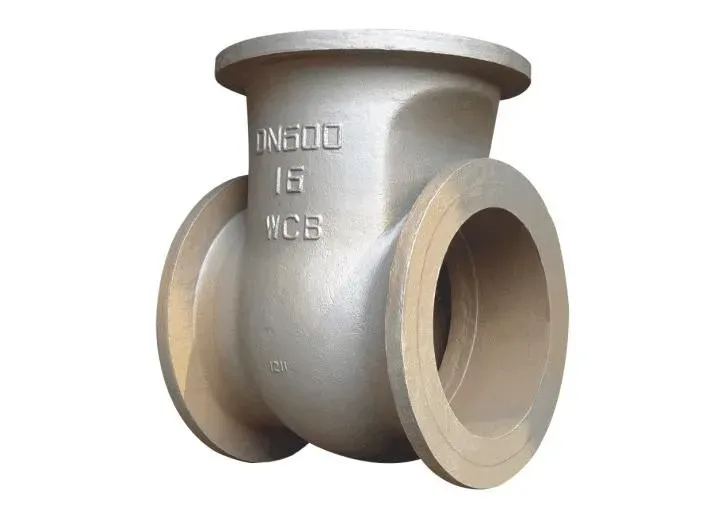 Definition of Cast Valve
Cast valves have bodies formed by pouring molten metal into a mold, where it solidifies into the desired shape. This process produces valve bodies with complex internal geometries that would be difficult or impossible to achieve through forging or machining alone.
Cast valves are used across many industries because of their design flexibility, material versatility, and cost-effectiveness for large or complex components. Depending on the casting material, they handle fluids ranging from water and steam to chemicals and gas.
The distinction between cast and forged valves comes down to how the body is made: casting pours molten metal into a mold, while forging shapes heated solid metal under pressure. For more on these two processes, see steel forging vs. casting.
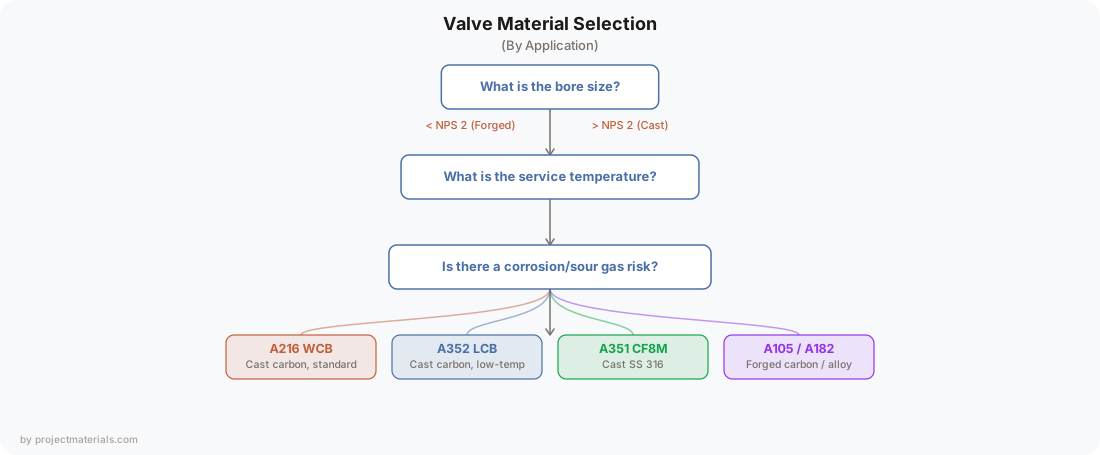
The following sections cover the most common cast valve body materials per ASTM standards.
ASTM A216 WCA, WCB, WCC (Carbon Steel for High-Temperature)
ASTM A216 covers carbon steel castings for valves, flanges, fittings, and other pressure-containing parts in high-temperature service. The standard includes three grades (WCA, WCB, and WCC) with WCB being the most widely specified.
These three grades differ primarily in mechanical properties and temperature limits:
- WCA has the lowest strength and temperature tolerance.
- WCB is the intermediate grade, balancing strength and ductility across a range of temperatures.
- WCC has higher strength and better impact properties at low temperatures than WCB.
ASTM A216 defines the chemical composition, mechanical properties, heat treatment, and testing requirements for these materials. The standard applies to components for industrial boilers, pressure vessels, and other equipment operating at elevated temperatures.
The ASTM A216 specification applies to cast valves that match carbon steel pipes in grades A53, A106, and API 5L.
ASTM A216 steel castings shall be heat treated and can be manufactured in annealed, normalized, or normalized tempered conditions. The surface of steel castings shall be free of adhering elements such as sand, cracks, hot tears, and other defects.
ASTM A216 carbon steel valves (cast), material chart
| ASTM A216 GRADE | C | Mn | P | S | Si | Cu | Ni | Cr | Mo | V |
|---|---|---|---|---|---|---|---|---|---|---|
| WCA UNS J02502 | 0.25(1) | 0.70(1) | 0.04 | 0.045 | 0.60 | 0.30 | 0.50 | 0.50 | 0.20 | 1.00 |
| WCB UNS J03002 | 0.30(2) | 1.00(2) | 0.04 | 0.045 | 0.60 | 0.30 | 0.50 | 0.50 | 0.20 | 1.00 |
| WCC UNS J02503 | 0.25(3) | 1.20(3) | 0.04 | 0.045 | 0.60 | 0.30 | 0.50 | 0.50 | 0.20 | 1.00 |
Notes:
- For each reduction of 0.01% below the specified maximum Carbon content, an increase of 0.04% of manganese above the specified maximum is allowed up to a maximum of 1.10%.
- For each reduction of 0.01% below the specified maximum Carbon content, an increase of 0.04% Mn above the specified maximum is allowed up to a maximum of 1.28%.
- For each reduction of 0.01% below the specified maximum Carbon content, an increase of 0.04% of manganese above the specified maximum is allowed to a maximum of 1.40%.
ASTM A352 LCB/LCC (Carbon Steel for Low-Temperature)
ASTM A352 covers steel castings for valves, flanges, fittings, and other pressure-containing parts intended primarily for low-temperature service. The standard includes several grades of carbon and alloy steel castings with varying mechanical properties and chemical compositions for different temperature ranges.
These grades are designed to perform reliably at temperatures below freezing, making them suitable for cold-climate installations and cryogenic processes.
Grades within this specification include:
- LCB: Carbon steel castings suitable for service temperatures down to -46°C (-50°F).
- LCC: Similar to LCB but with improved impact strength at lower temperatures, suitable for more demanding low-temperature conditions.
- LC1, LC2, LC3, LC4: Alloy steel grades for specific low-temperature ranges. LC3, for example, is a nickel steel casting rated for service down to -101°C (-150°F).
Each grade has defined requirements for chemical composition, mechanical properties (tensile strength, yield strength, elongation), and toughness. The standard also specifies heat treatment, quality, and test methods.
ASTM A352 is widely used in oil and gas, petrochemical plants, and other applications where materials face low temperatures and need high toughness to resist brittle fracture.
The ASTM A352 specification applies to cast valves that match carbon steel pipes for low-temperature applications in grades A333.
Chemical composition of A352 cast valves Gr. LCA/LCB/LCC (valve material chart):
| GRADE | C | Si | Mn | Cr | Mo | Ni | Cu | Nb | V |
|---|---|---|---|---|---|---|---|---|---|
| ASTM A352 LC3 | 0.15 | 0.6 | 0.65 | 3.5 | |||||
| ASTM A352 LCA | 0.25 | 0.6 | 0.7 | 0.5 | 0.2 | 0.5 | 0.3 | 0.03 | |
| ASTM A352 LCB | 0.3 | 0.6 | 1 | 0.5 | 0.2 | 0.5 | 0.3 | 0.03 | |
| ASTM A352 LCC | 0.25 | 0.6 | 1.2 | 0.5 | 0.2 | 0.5 | 0.03 |
ASTM A351 CF8/CF8M (Stainless Steel for High-Temp. and Corrosive Service)
ASTM A351 covers castings of austenitic steel for valves, flanges, fittings, and other pressure-containing parts. The specification targets stainless steel castings for high-temperature service.
ASTM A351 includes several grades, each with specific chemical compositions and mechanical properties for different service conditions.
Principal grades under ASTM A351:
- CF8: Equivalent to 304 stainless steel, with good general corrosion resistance.
- CF8M: Equivalent to 316 stainless steel, with added molybdenum for enhanced corrosion resistance in chemical processing environments.
- CF3 and CF3M: Low-carbon versions of CF8 and CF8M, respectively. They offer similar corrosion resistance with improved weldability and reduced susceptibility to intergranular corrosion after welding or heating.
The standard defines requirements for chemical composition, mechanical properties, heat treatment, and testing. ASTM A351 castings are used where corrosion resistance is needed at both ambient and elevated temperatures, including chemical, food processing, and petrochemical applications.
Any ASTM A351 cast part shall receive heat treatment followed by a quench in water or rapid cooling. The steel shall conform to the chemical and mechanical requirements set by the specification. The steel shall be made by the electric furnace process with or without separate refining such as argon-oxygen decarburization.
The ASTM A351 specification applies to cast valves that match stainless steel pipes for high-temperature and corrosive applications applications in ASTM A312.
ASTM A351 stainless steel valves, chemical composition
| ASTM A351 GRADE | UNS | C | Mn | Si | S | P | Cr | Ni | Mo | Nb | V | N | Cu |
|---|---|---|---|---|---|---|---|---|---|---|---|---|---|
| CF3+CF3A | J9270 | 0.03 | 1.5 | 2 | 0.04 | 0.04 | 17.0-21.0 | 8.0-11.0 | 0.5 | ||||
| CF8+CF8A | J9260 | 0.08 | 1.5 | 2 | 0.04 | 0.04 | 18.0-21.0 | 8.0-11.0 | 0.5 | ||||
| CF3M+CF3MA | J9280 | 0.03 | 1.5 | 1.5 | 0.04 | 0.04 | 17.0-21.0 | 9.0-13.0 | 2.0-3.0 | ||||
| CF8M | J9290 | 0.08 | 1.5 | 1.5 | 0.04 | 0.04 | 18.0-21.0 | 9.0-12.0 | 2.0-3.0 | ||||
| CF3MN | J92804 | 0.03 | 1.5 | 1.5 | 0.04 | 0.04 | 17.0-21.0 | 9.0-13.0 | 2.0-3.0 | 0.10-.20 | |||
| CF8C | J92710 | 0.08 | 1.5 | 2 | 0.04 | 0.04 | 18.0-21.0 | 9.0-12.0 | 0.5 | -1 | |||
| CF10 | J92950 | 0.04-0.10 | 1.5 | 2 | 0.04 | 0.04 | 18.0-21.0 | 8.0-11.0 | 0.5 | ||||
| CF10M | J92901 | 0.04-0.10 | 1.5 | 1.5 | 0.04 | 0.04 | 18.0-21.0 | 9.0-12.0 | 2.0-3.0 | ||||
| CH8 | J9340 | 0.08 | 1.5 | 1.5 | 0.04 | 0.04 | 22.0-26.0 | 12.-15.0 | 0.5 | ||||
| CH10 | J93401 | 0.04-0.10 | 1.5 | 2 | 0.04 | 0.04 | 22.0-26.0 | 12.-15.0 | 0.5 | ||||
| CH20 | J93402 | 0.04-0.20 | 1.5 | 2 | 0.04 | 0.04 | 22.0-26.0 | 12.0-15.0 | 0.5 | ||||
| CK20 | J94202 | 0.04-0.20 | 1.5 | 1.75 | 0.04 | 0.04 | 23.0-27.0 | 19.0-22.0 | 0.5 | ||||
| HK30 | J94203 | 0.25-0.35 | 1.5 | 1.75 | 0.04 | 0.04 | 23.0-27.0 | 19.0-22.0 | 0.5 | ||||
| HK40 | J94204 | 0.35-0.45 | 1.5 | 1.75 | 0.04 | 0.04 | 23.0-27.0 | 19.0-22.0 | 0.5 | ||||
| HT30 | N08030 | 0.25-0.35 | 2 | 2.5 | 0.04 | 0.04 | 13.0-17.0 | 33.0-37.0 | 0.5 | ||||
| CF10MC | 0.1 | 1.5 | 1.5 | 0.04 | 0.04 | 15.0-18.0 | 13.0-16.0 | 1.7-2.25 | -2 | ||||
| CN7M | N0807 | 0.07 | 1.5 | 1.5 | 0.04 | 0.04 | 19.0-22.0 | 27.5-30.5 | 2.0-3.0 | 3.0-4.0 | |||
| CN3MN | J94651 | 0.03 | 2 | 1 | 0.01 | 0.04 | 20.0-22.0 | 23.5-25.5 | 6.0-.0 | 0.18-.26 | 0.75 | ||
| CE8MN | 0.08 | 1 | 1.5 | 0.04 | 0.04 | 22.5-25.5 | 8.0-11.0 | 3.0-.5 | 0.10-.30 | ||||
| CG-6MMN | J93790 | 0.06 | 4.0-6.0 | 1 | 0.03 | 0.04 | 20.5-23.5 | 11.5-13.5 | 1.50-3.0 | 0.10-.30 | 0.10-.30 | 0.20-.40 | |
| CG8M | J9300 | 0.08 | 1.5 | 1.5 | 0.04 | 0.04 | 18.0-21.0 | 9.0-13.0 | 3.0-4.0 | ||||
| CF10SMnN | J92972 | 0.1 | 7.0-9.0 | 3.50-.50 | 0.03 | 0.06 | 16.0-18.0 | 8.0-9.0 | 0.08-.18 | ||||
| CT15C | N08151 | 0.05-0.15 | 0.15-.50 | 0.50-.50 | 0.03 | 0.03 | 19.0-21.0 | 31.0-.0 | 0.50-.50 | ||||
| CK-3MCuN | J93254 | 0.025 | 1.2 | 1 | 0.01 | 0.045 | 19.5-20.5 | 17.5-19.5 | 6.0-7.0 | 0.18-.24 | 0.50-1.0 | ||
| CE20N | J92802 | 0.2 | 1.5 | 1.5 | 0.04 | 0.04 | 23.0-26.0 | 8.0-.0 | 0.5 | 0.08-.20 | |||
| CG3M | J92999 | 0.03 | 1.5 | 1.5 | 0.04 | 0.04 | 18.0-21.0 | 9.0-.0 | 3.0-4.0 |
Notes:
- Grade CF8C shall have a Niobium content 8 times above the Carbon but not over 1.00%.
- Grade CF10MC shall have a Niobium content 10 times above the Carbon but not over 1.20%.
Mechanical Properties Cast Steel Valves Chart
The mechanical properties of cast steel valves determine their performance, durability, and suitability for specific service conditions. These properties vary by material grade and heat treatment.
| Property | Definition | Importance for Valves |
|---|---|---|
| Tensile Strength | The maximum stress a material can withstand while being stretched or pulled before failure. | Valves in high-pressure service need high tensile strength to prevent rupture under stress. |
| Yield Strength | The stress at which a material begins to deform plastically and will not return to its original shape. | Adequate yield strength keeps the valve from deforming under operational pressures. |
| Elongation | A measure of ductility: the extent to which a material can be stretched before breaking, expressed as a percentage of original length. | Indicates the valve’s ability to withstand deformation without cracking during thermal expansion and contraction. |
| Reduction of Area | The reduction in cross-sectional area of a specimen after fracture compared to its original area. | Helps assess material toughness and resistance to catastrophic failure. |
| Hardness | Resistance to deformation under a constant load, measured on Brinell, Rockwell, or Vickers scales. | Affects wear resistance and durability, especially with abrasive or corrosive fluids. |
| Impact Toughness | The ability to absorb energy and deform plastically without fracturing, typically measured by the Charpy V-notch test. | Required for valves exposed to sudden shocks or low temperatures where materials become more brittle. |
| Creep Strength | Resistance to deformation under prolonged high stress and temperature. | Relevant for high-temperature valves that must maintain shape and function over time. |
The correct material selection depends on pressure, temperature, and flow media. These properties are influenced by material composition, the casting process, and heat treatment.
The table below summarizes the mechanical properties of common ASTM cast steel valve grades:
| ASTM CAST GRADE | Tensile Strength (psi) | Yield Strength (psi min) | Elongation (at 2 inches) | Reduction of Area (%) | Modulus | Hardness (Brinell) |
|---|---|---|---|---|---|---|
| ASTM A216 Grade WCB | 70,000 | 36,000 | 22 | 35 | 27.9 | 137-187 |
| ASTM A352 Grade LCB | 65,000 | 35,000 | 24 | 35 | 27.9 | 137-187 |
| ASTM A217 Grade C5 | 90,000 | 60,000 | 18 | 35 | 27.4 | 241 Max. |
| ASTM A217 Grade WC1 | 65,000 | 35,000 | 24 | 35 | 29.9 | 215 Max. |
| ASTM A217 Grade WC6 | 70,000 | 40,000 | 20 | 35 | 29.9 | 215 Max. |
| ASTM A217 Grade WC9 | 70,000 | 40,000 | 20 | 35 | 29.9 | 241 Max. |
| ASTM A352 Grade LC3 | 65,000 | 40,000 | 24 | 35 | 27.9 | 137 |
| ASTM A217 Grade C12 | 90,000 | 60,000 | 18 | 35 | 27.4 | 180-240 |
| ASTM A351 Grade CF-8 | 65,000 | 28,000 | 35 | - | 28 | 140 |
| ASTM A351 Grade CF-8M | 70,000 | 30,000 | 30 | - | 28.3 | 156-170 |
| ASTM A126 Class B | 31,000 | - | - | - | - | 160-220 |
| ASTM A126 Class C | 41,000 | - | - | - | - | 160-220 |
| ASTM A395 Type 60-45-15 | 60,000 | 45,000 | 15 | - | 23-26 | 143-207 |
| ASTM A439 Type D-2B | 58,000 | 30,000 | 7 | - | - | 148-211 |
| ASTM B62 | 30,000 | 14,000 | 20 | 17 | 13.5 | 55-65* |
| ASTM B143 Alloy 1A | 40,000 | 18,000 | 20 | 20 | 15 | 75-85* |
| ASTM B147 Alloy 8A | 65,000 | 25,000 | 20 | 20 | 15.4 | 98* |
| ASTM B148 Alloy 9C | 75,000 | 30,000 | 12 min. | 12 | 17 | 150 |
| (Weldable Grade) | 65,000 | 32,500 | 25 | - | 23 | 120-170 |
| ASTM A494 (Hastelloy B) | 72,000 | 46,000 | 6 | - | - | - |
| ASTM A494 (Hastelloy C) | 72,000 | 46,000 | 4 | - | - | - |
| Stellite No. 6 | 121,000 | 64,000 | 1-2 | - | 30.4 | - |
| ASTM B211 Alloy 20911-T3 | 44,000 | 36,000 | 15 | - | 10.2 | 95 |
| ASTM B16 1/2 Hard | 45,000 | 15,000 | 7 | 50 | 14 | - |
| ASTM B21 Alloy 464 | 60,000 | 27,000 | 22 | 55 | - | - |
| AISI 12L 14 | 79,000 | 71,000 | 16 | 52 | - | 163 |
| ASTM A108 Grade 1018 | 69,000 | 48,000 | 38 | 62 | - | 143 |
| ASTM A193 Grade B7 (bolt) | 135,000 | 115,000 | 22 | 63 | 29.9 | 255 |
| ASTM A276 Type 302 | 85,000 | 35,000 | 60 | 70 | 28 | 150 |
| ASTM A276 Type 304 | 85,000 | 35,000 | 60 | 70 | - | 149 |
| ASTM A276 Type 316 | 80,000 | 30,000 | 60 | 70 | 28 | 149 |
| ASTM A276 Type 316L | 81,000 | 34,000 | 55 | - | - | 146 |
| ASTM A276 Type 410 | 75,000 | 40,000 | 35 | 70 | 29 | 155 |
| ASTM A461 Grade 630 | 135,000 | 105,000 | 16 | 50 | 29 | 275-345 |
| Alloy K500 (K Monel) | 100,000 | 70,000 | 35 | - | 26 | 175-260 |
| ASTM B335 (Hastelloy B) | 100,000 | 46,000 | 30 | - | - | - |
| ASTM B336 (Hastelloy C) | 100,000 | 46,000 | 20 | - | - | - |
ASTM Cast Steel Grade Selection
Selecting the correct ASTM cast steel grade for valves requires matching the material to the operating environment, temperature, pressure, fluid type, and applicable industry codes.
The following table outlines a structured selection process:
| Step | Action | Considerations |
|---|---|---|
| 1 | Assess Operating Conditions | Temperature: For high-temperature applications, grades like ASTM A216 WCB are common; low-temperature services may require ASTM A352 LCB or LCC. Pressure: Higher pressures demand materials with greater strength and durability. |
| 2 | Identify Fluid Characteristics | Corrosiveness: For corrosive fluids, select a material with high corrosion resistance, such as ASTM A351 CF8M (stainless steel). Abrasion: For abrasive fluids, choose a grade with good wear resistance or consider hard facing. Toxicity and Cleanliness: Food processing or pharmaceutical applications require materials meeting strict hygiene standards. |
| 3 | Check Mechanical and Chemical Properties | Tensile and Yield Strength: The material must withstand operational stresses. Impact Toughness: For cold environments, the material must have adequate low-temperature toughness (e.g., ASTM A352 grades). Chemical Composition: Alloying elements should be compatible with the fluid medium to prevent corrosion. |
| 4 | Verify Compliance with Standards | The selected grade must meet relevant industry standards and regulations, such as API specifications for oil and gas or FDA guidelines for food contact materials. |
| 5 | Evaluate Availability and Cost | Consider the material grade’s availability and cost-effectiveness. Higher grades may offer better performance but at greater cost and longer lead times. |
| 6 | Consult Specialists | For uncertain applications, consult material engineers or valve manufacturers for guidance on the most suitable grade. |
| 7 | Review Past Applications | Examine case studies or historical data from similar service conditions to verify material performance. |
Evaluating all these factors together helps verify the selected grade will deliver reliable, safe, and cost-effective performance over the valve’s service life.
ASTM Cast Steel Grade Recommended Service
The table shows the most common materials for cast valves and their recommended service:
| MATERIAL GROUP | MATERIAL GRADE | RECOMMENDED SERVICE |
|---|---|---|
| High-temperature Carbon Steel | ASTM A216 Grade WCB | Non-corrosive fluids such as water, oil, and gases at temperatures range -20°F (-30°C) and +800°F (+425°C) |
| Low-temperature Carbon Steel | ASTM A352 Grade LCB | Low temperature to -50°F (-46°C). Use excluded above +650°F (+340°C). |
| Low-temperature Carbon Steel | ASTM A352 Grade LC1 | Low temperature to -75°F (-59°C). Use excluded above +650°F (+340°C). |
| Low-temperature Carbon Steel | ASTM A352 Grade LC2 | Low temperature to -100°F (-73°C). Use excluded above +650°F (+340°C). |
| 3.1/2% Nickel Steel | ASTM A352 Grade LC3 | Low temperature to -150°F (-101°C). Use excluded above +650°F (+340°C). |
| 1.1/4% Chrome 1/2% Moly Steel | ASTM A217 Grade WC6 | Non-corrosive fluids such as water, oil, and gases at temperatures range -20°F (-30°C) and +1100°F (+593°C). |
| 2.1/4% Chrome | ASTM A217 Grade C9 | Non-corrosive fluids such as water, oil, and gases at temperatures range -20°F (-30°C) and +1100°F (+593°C). |
| 5% Chrome 1/2% Moly | ASTM A217 Grade C5 | Mild corrosive or erosive applications and non-corrosive applications at temperatures between -20°F (-30°C) and +1200°F (+649°C). |
| 9%Chrome1% Moly | ASTM A217 Grade C12 | Mild corrosive or erosive applications and non-corrosive applications at temperatures between -20°F (-30°C) and +1200°F (+649°C). |
| 12% Chrome Steel | ASTM A487 Grade CA6NM | Corrosive application at temperatures between -20°F (-30°C) and +900°F (+482°C). |
| 12% Chrome | ASTM A217 Grade CA15 | Corrosive application at temperatures up to +1300°F (+704°C) |
| Stainless steel 316 | ASTM A351 Grade CF8M | Corrosive or either extremely low or high-temperature non-corrosive services between -450°F (-268°C) and +1200°F (+649°C). Above +800°F (+425°C) specify carbon content of 0.04% or greater. |
| Stainless steel 347 | ASTM 351 Grade CF8C | Mainly for high-temperature, corrosive applications between -450°F (-268°C) and +1200°F (+649°C). Above +1000°F (+540°C) specify carbon content of 0.04% or greater. |
| Stainless steel 304 | ASTM A351 Grade CF8 | Corrosive or extremely high temperatures non-corrosive services between -450°F (-268°C) and +1200°F (+649°C). Above +800°F (+425°C) specify carbon content of 0.04% or greater. |
| Stainless steel 304L | ASTM A351 Grade CF3 | Corrosive or non-corrosive services to +800F (+425°C). |
| Stainless steel 316L | ASTM A351 Grade CF3M | Corrosive or non-corrosive services to +800F (+425°C). |
| Alloy-20 | ASTM A351 Grade CN7M | Good resistance to hot sulfuric acid to +800F (+425°C). |
| Monel | ASTM 743 Grade M3-35-1 | Weldable grade. Good resistance to corrosion by all common organic acids and salt water. Also highly resistant to most alkaline solutions to +750°F (+400°C). |
| Hastelloy B | ASTM A743 Grade N-12M | Well suited for handling hydrofluoric acid at all concentrations and temperatures. Good resistance to sulphuric and phosphoric acids to +1200°F (+649°C). |
| Hastelloy C | ASTM A743 Grade CW-12M | Good resistance to span oxidation conditions. Good properties at high temperatures. Good resistance to sulphuric and phosphoric acids to +1200°F (+649°C). |
| Inconel | ASTM A743 Grade CY-40 | Very good for high-temperature service. Good resistance to spangly corrosive media and atmosphere to +800°F (+425°C). |
| Bronze | ASTM B62 | Water, oil, or gas: up to 400°F. Excellent for brine and seawater service. |
We recommend purchasing the ASTM A216 specification from the ASTM website to get the full text of this specification.
Cast vs. forged valve selection: Cast valve bodies (ASTM A216, A352, A351) are used for valves larger than 2 inches, while forged bodies (ASTM A105, A350, A182) are preferred for smaller bore sizes or high-pressure applications requiring superior structural integrity. Match the ASTM grade to the temperature range: A216/A105 for high-temperature, A352/A350 for low-temperature, and A351/A182 for stainless steel service.
Forged Steel Valves (ASTM Grades)
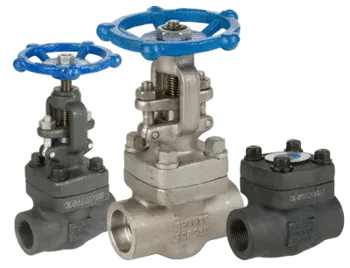
Definition of Forged Valve
A forged valve has a body made from forged steel. Forging involves heating a metal billet until it becomes malleable, then applying compressive force (typically with a hammer or press) to shape it. This process aligns the grain structure of the metal, producing higher strength, better durability, and greater resistance to impact and fatigue compared to castings.
Forged valves are valued in high-pressure and high-temperature applications across oil and gas, petrochemical, power generation, and marine industries. The forging process yields fewer internal defects and more consistent material properties than casting, resulting in reliable performance under demanding conditions.
Forged valves feature a body obtained by forging monolithic blocks of steel.
Forged bodies are typical for smaller-diameter valves (generally below 2 inches) or for high-pressure valves that demand superior structural integrity (regardless of bore size). Forged bodies are less prone to leakage than cast valve body materials.
The ASTM A105, ASTM A350, and ASTM A182 specifications cover materials for carbon, low-alloy, and stainless steel forged valves (the same specifications apply to other forged piping components, such as flanges).
ASTM A105 (Carbon Steel for High-Temperature)
ASTM A105 covers carbon steel forgings for valves, flanges, fittings, and other piping components in high-temperature service. The standard defines the manufacturing process, chemical composition, mechanical properties, and testing requirements.
ASTM A105 is widely used across oil and gas, chemical processing, and power generation for components operating at ambient and elevated temperatures.
Characteristics of ASTM A105
| Characteristic | Description |
|---|---|
| Chemical Composition | ASTM A105 has a significant carbon content that provides strength and heat resistance. The standard also specifies allowable contents for manganese, phosphorus, sulfur, and silicon, balancing strength, weldability, and ductility. |
| Mechanical Properties | ASTM A105 forgings have high tensile and yield strength, allowing them to withstand internal pressures without deforming. The material also has adequate elongation to handle stretching and bending forces during installation and operation. |
| Heat Treatment | Forging followed by heat treatment (normalizing, tempering, or quenching) refines the grain structure, improving toughness and resistance to impact and wear. |
| Weldability | Despite its higher carbon content, ASTM A105 steel maintains good weldability under proper conditions, allowing fabrication of complex piping systems with welded connections. |
Applications of ASTM A105 Forged Valves
ASTM A105 forged valves are used in high-pressure and high-temperature service, including:
- Oil and Gas Industry: Controlling flow of oil, natural gas, and by-products under extreme pressure and temperature conditions.
- Chemical Processing: Handling corrosive substances over a broad temperature range.
- Power Generation: Steam and water control in boilers, turbines, and auxiliary systems. Water Treatment and Distribution: Service with varying pressures and temperatures.
Advantages of ASTM A105 Forged Valves
| Advantage | Description |
|---|---|
| Durability and Reliability | The forging process combined with ASTM A105 material properties produces highly durable valves for harsh operating conditions. |
| Safety | ASTM A105 forged valves provide secure, leak-proof performance in high-pressure systems, reducing accident and environmental risk. |
| Cost-Effectiveness | ASTM A105 forged valves offer good value considering their lifespan and low maintenance requirements. |
| Standardization | Compliance with ASTM A105 means materials meet recognized industry standards, supporting compatibility and interchangeability in piping systems. |
Chemical composition of ASTM A105
| Grade | C | Mn | P | S | Si | Cu | Ni | Cr | Mo | V |
|---|---|---|---|---|---|---|---|---|---|---|
| A105 | 0.35 | 0.60-1.05 | 0.035 | 0.040 | 0.10-0.35 | 0.40 | 0.40 | 0.30 | 0.12 | 0.08 |
Mechanical Properties of ASTM A105
| Property | ASTM A105 | ASTM A350-LF2 |
|---|---|---|
| Tensile Strength Min, psi | 70,000 | 70,000-95,000 |
| Tensile Strength Min, N/mm² | 485 | 485-655 |
| Yield Strength Min, psi | 36,000 | 36,000 |
| Yield Strength Min, N/mm² | 250 | 250 |
| Elongation (%) | 22 | 22 |
| Reduction of Area (%) | 30 | 30 |
| Hardness, maximum | 187 | - |
| CVN at -50℉ | - | 15/12 ft-lbs (20/16 joules) |
ASTM A350 (Carbon Steel for Low-Temperature)
ASTM A350 covers several grades of carbon and low-alloy steel forged or ring-rolled flanges, forged fittings, and valves intended primarily for low-temperature service and requiring notch toughness testing.
These materials are suitable for environments below -29°C (-20°F), making them appropriate for cold-climate installations and cryogenic processes.
Notch Toughness Requirement
The defining characteristic of ASTM A350 is its mandatory notch toughness testing, which verifies adequate resilience and strength at low temperatures. This keeps piping systems operational and leak-free under freezing conditions.
Chemical Composition ASTM A350
ASTM A350 specifies strict chemical composition limits for each grade to achieve the required low-temperature toughness, weldability, and corrosion resistance.
| Grade | C% | Mn% | Si% | S% | P% | Cr% | Ni% |
|---|---|---|---|---|---|---|---|
| A350 LF1 | 0.30 max | 0.6/1.35 | .15/.30 | .040 max | .035 max | 0.30 max | 0.40 max |
| A350 LF2 | 0.30 max | 0.6/1.35 | .15/.30 | .040 max | .035 max | 0.30 max | 0.40 max |
| A350 LF3 | 0.20 max | 0.9 | .20/.35 | .040 max | .035 max | 0.30 max | 3.3/3.7 |
Mechanical Properties
The specification sets minimum mechanical properties (tensile strength, yield strength, elongation, and impact values) so materials can withstand the pressures and stresses of low-temperature environments without failure.
| Property | ASTM A105 | ASTM A350-LF2 |
|---|---|---|
| Tensile Strength Min, psi | 70,000 | 70,000-95,000 |
| Tensile Strength Min, N/mm² | 485 | 485-655 |
| Yield Strength Min, psi | 36,000 | 36,000 |
| Yield Strength Min, N/mm² | 250 | 250 |
| Elongation (%) | 22 | 22 |
| Reduction of Area (%) | 30 | 30 |
| Hardness, maximum | 187 | - |
| CVN at -50℉ | - | 15/12 ft-lbs (20/16 joules) |
Grades within ASTM A350
ASTM A350 includes several grades, with LF2 and LF3 being the most common for valve manufacturing:
- LF1, LF2, LF3: Low-alloy steels with varying nickel content for different minimum service temperatures. LF2 is the most popular for general low-temperature service, providing a good balance of toughness and strength.
- LF6: Intended for low-temperature applications requiring corrosion resistance, classified under several classes.
- LF9: Higher alloy content for improved strength and toughness.
- LF787: A more recent addition with enhanced toughness and weldability.
Applications of ASTM A350 Forged Valves
ASTM A350 forged valves are used where low-temperature performance and notch toughness are required:
- Oil and Gas: Cold-climate installations and offshore platforms with significant temperature drops.
- Chemical Processing: Processes involving cryogenic substances or low-temperature chemical reactions.
- Power Generation: Systems involving liquified natural gas (LNG) or other cryogenic fluids.
- Cryogenic Services: Storage and transportation of liquified gases such as nitrogen, oxygen, and argon.
Advantages of ASTM A350 Forged Valves
| Advantage | Description |
|---|---|
| Durability in Low Temperatures | These valves maintain strength and toughness at extremely low temperatures, reducing the risk of cracking and failure. |
| Versatility | Multiple grades within ASTM A350 allow material selection based on specific mechanical property and temperature requirements. |
| Safety | Mandatory notch toughness testing verifies the valves can handle sudden stresses and shocks without fracturing. |
ASTM A350 is a primary material specification for forged valves in low-temperature service. Its strict requirements for toughness, strength, and brittle fracture resistance provide reliable performance in cold environments and cryogenic processes.
ASTM A182 (Stainless Steel)
ASTM A182 covers forged or rolled alloy and stainless steel pipe flanges, forged fittings, and valves and parts for high-temperature service. The standard is intended for high-pressure and high-temperature environments, with multiple alloy grades for various service conditions including corrosive and elevated-temperature applications.
Features of ASTM A182
| Feature | Description |
|---|---|
| Versatility | ASTM A182 includes many alloy compositions for applications requiring high strength, durability, and resistance to harsh environments. |
| High-Temperature Service | Materials under ASTM A182 are designed for high-temperature operation, suitable for power generation, chemical processing, and oil and gas. |
| Corrosion Resistance | Many stainless steel and alloy grades in ASTM A182 provide excellent corrosion resistance for service with corrosive fluids. |
Grades within ASTM A182
ASTM A182 includes several commonly specified grades:
- F304/F304L and F316/F316L: Austenitic stainless steel grades with excellent corrosion resistance and mechanical properties. The “L” suffix indicates lower carbon content, which reduces susceptibility to intergranular corrosion after welding.
- F11, F22, and F91: Low alloy steels with varying chromium and molybdenum content, providing different levels of strength, corrosion resistance, and high-temperature capability.
- F51, F53, F55: Duplex and super duplex stainless steel grades with high strength and excellent resistance to chloride-induced stress corrosion cracking.
Applications of ASTM A182 Forged Valves
Valves manufactured to ASTM A182 are used in:
- Oil and Gas: Upstream and downstream processes requiring high strength and corrosion resistance.
- Chemical Processing: Handling acidic or basic chemicals and organic solvents at high temperatures.
- Power Generation: Steam and water control systems in power plants, including nuclear reactors.
- Marine Applications: Environments where saltwater exposure demands corrosion resistance.
Advantages of ASTM A182 Forged Valves
- Durability: Forging combined with high-quality alloy steel produces valves with superior strength, capable of withstanding high pressures and temperatures.
- Corrosion Resistance: The specification includes stainless steel and alloy grades with excellent resistance to various corrosive environments.
- Customizability: The variety of available grades allows material selection specifically matched to application demands.
ASTM A182 provides a framework for high-quality forged valves in high-temperature and high-pressure service. Its range of alloy and stainless steel grades covers most demanding industrial applications, combining strength, corrosion resistance, and durability.
Chemical Composition ASTM A182
ASTM A182 Forged Steel Valves Materials Composition, %
| ASTM A182 GRADE | C | Mn | P | S | Si | Ni | Cr | Mo | Nb | Ti | Others |
|---|---|---|---|---|---|---|---|---|---|---|---|
| F304(1) | 0.08 | 2.0 | 0.045 | 0.030 | 1.0 | 8.0-11.0 | 18.0-20.0 | ||||
| F304H | 0.04-0.10 | 2.0 | 0.045 | 0.030 | 1.0 | 8.0-11.0 | 18.0-20.0 | ||||
| F304L(1) | 0.030 | 2.0 | 0.045 | 0.030 | 1.0 | 8.0-13.0 | 18.0-20.0 | ||||
| F304N(2) | 0.08 | 2.0 | 0.045 | 0.030 | 1.0 | 8.0-10.5 | 18.0-20.0 | ||||
| F304LN(2) | 0.030 | 2.0 | 0.045 | 0.030 | 1.0 | 8.0-10.5 | 18.0-20.0 | ||||
| F309H | 0.04-0.10 | 2.0 | 0.045 | 0.030 | 1.0 | 12.0-15.0 | 22.0-24.0 | ||||
| F310 | 0.25 | 2.0 | 0.045 | 0.030 | 1.0 | 19.0-22.0 | 24.0-26.0 | ||||
| F310H | 0.04-0.10 | 2.0 | 0.045 | 0.030 | 1.0 | 19.0-22.0 | 24.0-26.0 | ||||
| F310MoLN | 0.030 | 2.0 | 0.030 | 0.015 | 0.40 | 21.0-23.0 | 24.0-26.0 | 2.0-3.0 | N 0.10-0.16 | ||
| F316 | 0.08 | 2.0 | 0.045 | 0.030 | 1.0 | 10.0-14.0 | 16.0-18.0 | 2.0-3.0 | |||
| F316H | 0.04-0.10 | 2.0 | 0.045 | 0.030 | 1.0 | 10.0-14.0 | 16.0-18.0 | 2.0-3.0 | |||
| F316L(1) | 0.030 | 2.0 | 0.045 | 0.030 | 1.0 | 10.0-15.0 | 16.0-18.0 | 2.0-3.0 | |||
| F316N(2) | 0.08 | 2.0 | 0.045 | 0.030 | 1.0 | 11.0-14.0 | 16.0-18.0 | 2.0-3.0 | |||
| F316LN(2) | 0.030 | 2.0 | 0.045 | 0.030 | 1.0 | 11.0-14.0 | 16.0-18.0 | 2.0-3.0 | |||
| F316Ti | 0.08 | 2.0 | 0.045 | 0.030 | 1.0 | 10.0-14.0 | 16.0-18.0 | 2.0-3.0 | (3) | N 0.10 max | |
| F317 | 0.08 | 2.0 | 0.045 | 0.030 | 1.0 | 11.0-15.0 | 18.0-20.0 | 3.0-4.0 | |||
| F317L | 0.030 | 2.0 | 0.045 | 0.030 | 1.0 | 11.0-15.0 | 18.0-20.0 | 3.0-4.0 | |||
| F321 | 0.08 | 2.0 | 0.045 | 0.030 | 1.0 | 9.0-12.0 | 17.0-19.0 | (4) | |||
| F321H | 0.04-0.10 | 2.0 | 0.045 | 0.030 | 1.0 | 9.0-12.0 | 17.0-19.0 | (5) | |||
| F347 | 0.08 | 2.0 | 0.045 | 0.030 | 1.0 | 9.0-13.0 | 17.0-20.0 | (6) | |||
| F347H | 0.04-0.10 | 2.0 | 0.045 | 0.030 | 1.0 | 9.0-13.0 | 17.0-20.0 | (7) | |||
| F348 | 0.08 | 2.0 | 0.045 | 0.030 | 1.0 | 9.0-13.0 | 17.0-20.0 | (6) | Co 0.20Ta 0.10 | ||
| F348H | 0.04-0.10 | 2.0 | 0.045 | 0.030 | 1.0 | 9.0-13.0 | 17.0-20.0 | (7) | Co 0.20Ta 0.10 |
Notes:
- Grades F304, F304L, F316, and F316L shall have a maximum Nitrogen of 0.10%.
- Grades F304N, F316N, F304LN, and F316LN shall have a Nitrogen of 0.10 to 0.16%.
- Grade F316Ti shall have a Titanium content five times above the Carbon plus Nitrogen and not more than 0.70%.
- Grade F321 shall have a Titanium content five times above the Carbon and not more than 0.70%.
- Grade F321H shall have a Titanium content four times above the Carbon and not more than 0.70%.
- Grades F347 and F348 shall have a Niobium content ten times above the Carbon and not more than 1.10%.
- Grades F347H and F348H shall have a Niobium content above than eight times the Carbon and not more than 1.10%.
Mechanical Properties ASTM A182
| ASTM A182 Grade | Minimum Tensile Strengthin MPa | Minimum Yield pointin Mpa | Minimum Elongationin % | Minimum Reduction of inmin, % |
|---|---|---|---|---|
| ASTM A182 F304 | 515 | 205 | 30 | 50 |
| ASTM A182 F304L | 485 | 170 | 30 | 50 |
| ASTM A182 F316 | 515 | 205 | 30 | 50 |
| ASTM A182 F316L | 485 | 170 | 30 | 50 |
| ASTM A182 F321 | 515 | 205 | 30 | 50 |
Recommended Service Forged Steel Valves
The table shows the most common materials for forged valves and their respective recommended service:
Forged Material Grade
| ASTM Grade | Material Name | Recommended Service |
|---|---|---|
| 304 | 19%Chrome 9%Nickel | Applications at temperatures up to +1000°F (+538°C). |
| 316 | 19%Chrome, 10%Nickel 2%Moly | Applications at temperatures up to +1000°F (+538°C). |
| 321 | 18%Chrome, 10%Nickel with Titanium | Applications at temperatures up to +800°F (+427°C). |
| 347 | 18%Chrome, 10%Nickel with Columbium | 347 has good intergranular-corrosion resistance and is resistant to atmospheric conditions between temperatures of +800°F(+427°C) and +1650°F(+899°C). |
| 400 | Monel | This nickel alloy has good corrosion resistance, good weldability, and, high strength. Great mechanical properties at subzero temperatures up to +1000°F (+538°C). |
| 410 | 13%Chrome 1/2%Moly | 410 is the basic martensitic stainless. It has good impact strength, corrosion, and scaling resistance up to +1200°F (+649°C). |
| 420 | 13%Chrome, 1%Nickel 1/4%Moly | Full corrosion resistance only in the hardened or hardened and stress-relieved conditions. The temperature should be below +800°F (+427°C). |
| 600 | Inconel | This nickel-chromium alloy has good oxidation resistance at higher temperatures to +2000°F (+1093°C) |
| 625 | Inconel | This nickel-chromium alloy has good carburization and oxidation in high resistance at higher temperatures to +2000°F (+1093°C). |
| 825 | Incoloy | Alloy 825 has a high level of corrosion resistance in both reducing and oxidizing environments and good mechanical properties at temperatures up to +1000°F (+538°C). |
| 17-4PH | 15-1/2%Chrome 4-1/2%Nickel | Good corrosive resistance properties at temperatures up to +600°F (+316°C). |
| 304H | 18%Chrome 9%Nickel | Applications at temperatures up to +800°F (+427°C). |
| 304L | 19%Chrome, 10%Nickel Low Carbon | Applications at temperatures up to +800°F (+427°C). |
| 316H | 18%Chrome, 8%Nickel with Molybdenum | Applications at temperatures up to +800°F (+427°C). |
| 316L | 19%Chrome, 10%Nickel 2%Moly, Low Carbon | Applications at temperatures up to +800°F (+427°C). |
| 317L | 25%Chrome, 21%Nickel 3/4%Moly | 317L has superior corrosion resistance in difficult environments and can be used at temperatures between +1700°F (+927°C) to +2200°F (+1204°C). |
| 440C | 17%Chrome 3/4%Moly | This grade is used in the hard plus tempered condition. For best corrosion resistance, the tempering temperature should be below +800°F (+427°C). |
| 800H/HT | Incoloy | This nickel-chromium alloy has good carburization and oxidation in high resistance and is normally used in temperatures above +1100°F (+593°C). |
| A105N | 1/4% Max Carbon Steel | Non-corrosive applications include water, oil, and, gases at temperatures between -20°F (-30°C) and +800°F (+427°C). |
| ALLOY 20 | 20%Chrome, 35%Nickel 2-1/2%Moly | Good resistance to hot sulfuric acid to +800°F (+425°C). |
| C276 | Hastelloy | This nickel-molybdenum-chromium alloy has excellent corrosion resistance in various corrosive media and corrosion resistance to ambient temperatures. |
| F11 | 1-1/4%Chrome 1/2%Moly | Non-corrosive applications include water, oil, and, gases at temperatures between -20°F (-30°C) and +1100°F (+593°C). |
| F22 | 2-1/4%Chrome 1%Moly | Non-corrosive applications include water, oil, and, gases at temperatures between -20°F (-30°C) and +1100°F (+593°C). |
| F5 | 5%Chrome 1/2%Moly | Non-corrosive applications at temperatures between -20°F (-30°C) and +1200°F (+650°C). |
| F51 | 22%Chrome, 5%Nickel 3%Moly | F51 is a super duplex stainless steel. Good Moderate to good corrosion resistance in a variety of environments. Service to +600°F (+316°C). |
| F53 | 25%Chrome, 7%Nickel 4-1/2%Moly | F53 is a super duplex stainless steel. This material has excellent corrosion resistance in a variety of environments. Service to +600°F (+316°C). |
| F55 | 25%Chrome, 7%Nickel 3-1/2%Moly | This material combines high mechanical strength and good ductility with excellent corrosion resistance in environments with temperatures up to +600°F (+316°C). |
| F9 | 9%Chrome 1%Moly | Non-corrosive applications at temperatures between -20°F (-30°C) and +1200°F (+650°C). |
| F91 | 9%Chrome 1%Moly | Non-corrosive applications at temperatures between -20°F (-30°C) and +1200°F (+650°C). |
| K500 | Monel | This nickel alloy has good corrosion resistance. Monel K500 has great mechanical properties at subzero temperatures up to about +480°C. |
| LF2 | Low-Temp Carbon Steel | Non-corrosive applications at temperatures from -50°F (-46°C) to +800°F (+427°C). |
| X-750 | Inconel | This nickel-chromium alloy has good resistance to corrosion and oxidation along with high tensile and creep-rupture properties at temperatures up to +1300°F (+700°C). |
Cross Reference Chart: ASTM Cast vs. Forged Materials
The table shows the equivalent grades for cast and forged steel valve bodies:
| Material Group | Forged Grade | Equivalent Cast Grade |
|---|---|---|
| Carbon Steel | A181-Gr.1 A181-Gr.2 | |
| Moderate, high temp. service | A105-Gr.1 A105-Gr.2 | A216-WCA WCB WCC |
| Cold temp. service | A350-LF1 A350-LF2 | A352-LCB, LCC |
| Carbon -1/2 Moly Alloy Steel | ||
| High Temp Service | A182-F1 | A217-WC1 |
| Cold Temp Service | A352-LC1 | |
| 1/2Cr-1/2Mo Alloy Steel | A182-F2 | |
| 1/2Cr-1/2Mo-1 Alloy Steel | A217-WC4 | |
| 3/4Cr-1 Mo-3/4NI Alloy Steel | A217-WC5 | |
| 1Cr-1/2Mo Alloy Steel | A182-F12 | |
| 1Cr-1 Mo-Vd Alloy Steel | A404-F24 | A389-C24 |
| 1-1/4Cr-1/2Mo Alloy Steel | A182-F11 | A217-WC6 |
| 1-1/4Cr-1/2Mo-Vd Alloy Steel | A389-C23 | |
| 2-1/4Cr-1/2Mo-Vd Alloy Steel | A182-F22 | A217-WC9 |
| 3Cr-1 Mo Alloy Steel | A182-F21 | |
| 5Cr-1/2Mo Alloy Steel | A182-F5 | |
| 5Cr-1/2Mo-Si Alloy Steel | A217-Gr.C5 | |
| 7Cr-1/2Mo Alloy Steel | A182-F7 | |
| 9Cr-1 Mo Alloy Steel | A182-F9 | A217-Gr.C12 |
| 13Cr Alloy Steel | A182-F6 | A351-CA15 |
| Type 304 Stainless Steel | ||
| Standard | A182-F304 | A351-Gr.CF8 CF8a |
| Low Carbon | A182-F304-L | A351-Gr.CF3 CF3a |
| High Temp Service | A182-F304-H | A351.Gr.CF10 |
| Type 309 Stainless Steel | ||
| Type 310 Stainless Steel | A182-F310 | |
| Type 316 Stainless Steel | ||
| Standard | A182-F316 | A351-Gr.CF8M |
| Low Carbon | A182-F316-L | A351-Gr.CF3M |
| High Temp Service | A182-F316-H | A351.Gr.CF10 |
| Type 317 Stainless Steel | A403-WP317 | |
| Type 321 Stainless Steel | ||
| Standard | A182-F321 | |
| High Temp Service | A182-F321-H | |
| Type 347 Stainless Steel | ||
| Standard | A182-F347 | |
| High Temp Service | A182-F347-H | A351-Gr.CF8C |
| Type 348 Stainless Steel | ||
| Standard | A182-F348 | |
| High Temp Service | A182-F348-H | |
| 20 Ni-8 Cr Alloy | A182-F10 | |
| 2 Nickel Alloy Steel | ||
| Low Temp Service | A352-LC2 |
Valve Trim
What Is Valve Trim?
The trim of a valve is the collective name for all the replaceable parts in direct contact with the fluid (“wet parts”).
Valve trim typically includes the disc/plug, stem, cage, seat ring, gaskets, and packing (the exact configuration depends on the valve type). The API 600 trim chart designates standard material combinations with a conventional number (for example, Trim 8).
API Valve Trim Chart
The API 600 specification designates typical combinations of valve trim materials with a number (API trim #1, trim #2, etc.).
Selecting the correct trim material combination is one of the most important decisions in valve specification.
| API TRIM # | TRIM MATERIAL | SEAT | DISC/WEDGE | BACKSEAT | STEM |
|---|---|---|---|---|---|
| 1 | 410 | 410 | 410 | 410 | 410 |
| 2 | 304 | 304 | 304 | 304 | 304 |
| 3 | F310 | 310 | 310 | 310 | 310 |
| 4 | Hard 410 | Hard 410 | 410 | 410 | 410 |
| 5 | Hard faced | Stellite | Stellite | 410 | 410 |
| 5A | Hard faced | Ni-Cr | Ni-Cr | 410 | 410 |
| 6 | 410 and Cu-Ni | Cu-Ni | Cu-Ni | 410 | 410 |
| 7 | 410 and Hard 410 | Hard 410 | Hard 410 | 410 | 410 |
| 8 | 410 and Hardfaced | Stellite | 410 | 410 | 410 |
| 8A | 410 and Hardfaced | Ni-Cr | 410 | 410 | 410 |
| 9 | Monel | Monel | Monel | Monel | Monel |
| 10 | 316 | 316 | 316 | 316 | 316 |
| 11 | Monel | Stellite | Monel | Monel | Monel |
| 12 | 316 and Hardfaced | Stellite | 316 | 316 | 316 |
| 13 | Alloy 20 | Alloy 20 | Alloy 20 | Alloy 20 | Alloy 20 |
| 14 | Alloy 20 and Hardfaced | Stellite | Alloy 20 | Alloy 20 | Alloy 20 |
| 15 | 304 and Hardfaced | Stellite | Stellite | 304 | 304 |
| 16 | 316 and Hardfaced | Stellite | Stellite | 316 | 316 |
| 17 | 347 and Hardfaced | Stellite | Stellite | 347 | 347 |
| 18 | Alloy 20 and Hardfaced | Stellite | Stellite | Alloy 20 | Alloy 20 |
Valve Trim Selection Criteria
Selecting the correct valve trim affects performance, service life, and safety. The trim includes all components in direct contact with the fluid (disc, seat, stem, and sleeve) which control flow regulation, sealing, and overall valve function.
The following table outlines a trim selection process:
| Step | Action | Considerations |
|---|---|---|
| 1 | Define Application Requirements | Fluid Characteristics: Identify the fluid type (liquid, gas, corrosive, abrasive, etc.). Pressure and Temperature: The trim material must withstand operating conditions without degrading. Flow Control Needs: Determine whether the valve will be used for on/off service, throttling, or both. |
| 2 | Select the Trim Material | Corrosion Resistance: For corrosive fluids, select materials like stainless steel, Hastelloy, or Monel. Wear Resistance: For abrasive fluids or high velocity, use hardened materials or coatings such as Stellite. Temperature Capability: Verify the trim material can handle the minimum and maximum operating temperatures. |
| 3 | Choose the Trim Design | Contoured Plugs: Suitable for throttling applications requiring smooth and precise flow control. Balanced Trim: Reduces the force required to operate the valve in high-pressure applications. Soft Seats: Use soft seat materials (such as PTFE) for tight sealing with low torque. Cage-Guided Trim: Offers stability and reduced vibration for high flow rates. |
| 4 | Verify Trim Characteristics | Leakage Class: Select a trim that meets the required leakage rate per ANSI/FCI 70-2. Flow Coefficient (Cv): The trim should provide an appropriate Cv value without causing excessive noise, cavitation, or erosion. |
| 5 | Evaluate Additional Features | Noise Reduction: Consider trims designed to reduce noise, such as multi-stage or labyrinth-type trims. Cavitation Control: For liquid services prone to cavitation, select anti-cavitation trims to minimize or eliminate cavitation damage. |
| 6 | Review and Test | After selecting a trim, verify the selection against all application requirements and, if possible, test under actual operating conditions to confirm performance. |
API Valve Trim: Recommended Service
| TRIM | RECOMMENDED SERVICE |
|---|---|
| 13% Cr, Type 410 Stainless Steel | For oil and oil vapors and general services with heat-treated seats and wedges. |
| 13% Cr, Type 410 plus Hardfacing | Universal trim for general service requiring long service life up to 1100°F (593°C).* |
| Type 316 Stainless | For liquids and gases that are corrosive to 410 Stainless Steel, up to 1000°F (537°C).* |
| Monel | For corrosive service to 842°F (450°C) such as acids, alkalies, salt solutions, etc. |
| Alloy 20 | For corrosive services such as hot acids -49°F to 608oF (-45°C to 320°C). |
| NACE | Specially treated 316 or 410 trim combined optionally with B7M Bolts and 2HM nuts to meet NACE MR-01-75 requirements. |
| Full Stellite | Full hard-faced trim, suitable for abrasive & severe services up to 1200°F (650°C).* |
- Depends upon base material grade
Leave a Comment
Have a question or feedback? Send us a message.
Previous Comments
Hi Gent: I have two valves 1.5″ class 800, the material of the first is A105N AACV & Material of second is A350LF2 CL1QT UU4 these valves will be welded on nipple with following material SA / A106B. Please advise if the second valve will be accepted to weld on this nipple & according any standard please. Best Regards
As you mentioned, forged steel valves are for high pressure situations. My brother recently started working in a factory and there are many valves that need to be working to make things run smoothly. It would be interesting to see everything in action.
Hi, thank you for such a brilliant post. I have been reading some blogs that gives me more knowledge about this topic makenine 2020. I must say this is one of the best among them. You have done a great research for I feel, thanks for sharing.
This is perhaps one of the most detailed breakdown of valve material specifications that goes right down to the miniscule details for both cast and forged steel valves. Thorough work and thanks for sharing!
What body and trim material selected for propane and butane