

HEM Beam: Dimensions & Weight
HEM Steel Beams (“M” Sections)
What Are HEM Steel Beams?
HEM beams are the heaviest series in the European wide-flange beam family, alongside HEA and HEB. For a given size designation (e.g., HEM 300), the HEM has the same nominal depth and flange width as HEA/HEB 300, but with significantly thicker flanges and web. The result is a beam that weighs roughly 50-70% more than the HEB equivalent but delivers substantially more bending and axial capacity.
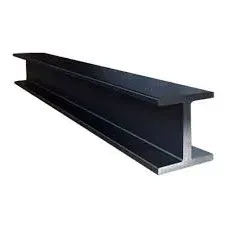 HEM steel beam
HEM beams are specified when the loads or spans exceed what HEB can handle efficiently - typically as transfer beams carrying multiple floors, primary columns in multi-story buildings, crane girders, bridge main beams, and heavy industrial portal frames. They’re also used where the beam depth is constrained (low headroom) but the load is high: the thicker flanges of HEM provide extra capacity without increasing the overall depth.
The “M” designation originally comes from the French “Moyenne” or German “Mittel” in early European classification, though today it simply represents the heavy series. In some older references you’ll see them called “Continental wide flange” sections.
HEM vs HEA/HEB: Quick Comparison
To put the difference in concrete numbers, here’s a comparison at size 300:
| Property | HEA 300 | HEB 300 | HEM 300 |
|---|---|---|---|
| Depth | 290 mm | 300 mm | 340 mm |
| Flange width | 300 mm | 300 mm | 310 mm |
| Flange thickness | 14 mm | 19 mm | 39 mm |
| Web thickness | 8.5 mm | 11 mm | 21 mm |
| Weight | 88.3 kg/m | 117 kg/m | 238 kg/m |
| Section modulus Wx | 1260 cm³ | 1680 cm³ | 4078 cm³ |
The HEM 300 weighs about twice the HEB 300 but offers 2.4x the section modulus. Where depth is not the constraint, you could achieve similar capacity with a larger HEB - but when headroom is tight or you need maximum stiffness at a given depth, HEM is the answer.
The design hierarchy is simple: start with HEA for preliminary sizing. If it’s not enough, step up to HEB. If HEB isn’t enough, go to HEM. If HEM isn’t enough, you’re looking at built-up plate girders or trusses.
Specifications and Material Grades
HEM beams are governed by the same European standards as HEA/HEB:
| Standard | Scope |
|---|---|
| EN 10365 | Dimensions and masses for the full HEM range (HEM 100 to HEM 1000) |
| EN 10034 | Tolerances on shape and dimensions |
| EN 10025 | Steel grades and mechanical properties |
The standard material grades are the same as for HEA/HEB beams:
| Grade | Yield (MPa) | Tensile (MPa) | Impact | Use |
|---|---|---|---|---|
| S235JR | 235 | 360-510 | 27J at +20°C | Secondary members, light framing |
| S275JR | 275 | 410-560 | 27J at +20°C | General building frames |
| S355J2 | 355 | 470-630 | 27J at -20°C | Primary structure, bridges, industrial |
| S355K2 | 355 | 470-630 | 40J at -20°C | Cold-climate applications |
| S460M | 460 | 540-720 | 27J at -20°C | Bridges, cranes, high-performance structures |
S355J2 is the default for heavy structural applications. S460M (thermomechanically rolled) is specified for projects where reducing steel weight matters - bridges and long-span structures - though it requires more attention to welding procedures due to the higher strength.
Dimensions & Weights HEM Steel Beams
The dimensions and weight of HEM steel beams vary significantly across the range, catering to a variety of structural needs. The HEM series offers some of the largest and heaviest H-sections available, making them suitable for major construction projects requiring high load-bearing capacity and long spans. The following table provides a generalized overview of the dimensions and weights for a selection of HEM steel beams. Please note, for precise specifications, always refer to the latest standards or manufacturer’s details.
HEM Dimensions & Weights by Size
| Beam Size | Depth (mm) | Width of Flange (mm) | Thickness of Web (mm) | Thickness of Flange (mm) | Weight (kg/m) |
|---|---|---|---|---|---|
| HEM 100 | 120 | 106 | 12 | 20 | 41.8 |
| HEM 120 | 140 | 126 | 12.5 | 21 | 52.1 |
| HEM 140 | 160 | 146 | 13 | 22 | 63.2 |
| HEM 160 | 180 | 166 | 14 | 23 | 76.2 |
| HEM 180 | 200 | 186 | 14.5 | 24 | 88.9 |
| HEM 200 | 220 | 206 | 15 | 25 | 103 |
| HEM 220 | 240 | 226 | 15.5 | 26 | 117 |
| HEM 240 | 270 | 248 | 18 | 32 | 167 |
| HEM 260 | 290 | 268 | 18 | 32.5 | 172 |
| HEM 280 | 310 | 288 | 18.5 | 33 | 177 |
| HEM 300 | 340 | 310 | 21 | 39 | 244 |
| HEM 320 | 359 | 309 | 21 | 40 | 251 |
| HEM 340 | 377 | 309 | 21 | 40 | 256 |
| HEM 360 | 395 | 308 | 21 | 40 | 262 |
| HEM 400 | 432 | 307 | 21 | 40 | 291 |
| HEM 450 | 478 | 307 | 21 | 40 | 320 |
| HEM 500 | 524 | 306 | 21 | 40 | 349 |
| HEM 550 | 572 | 306 | 21 | 40 | 377 |
| HEM 600 | 620 | 305 | 21 | 40 | 405 |
| HEM 650 | 668 | 305 | 21 | 40 | 434 |
| HEM 700 | 716 | 304 | 21 | 40 | 461 |
| HEM 800 | 814 | 303 | 21 | 40 | 520 |
| HEM 900 | 910 | 302 | 21 | 40 | 582 |
| HEM 1000 | 1008 | 302 | 21 | 40 | 642 |
HEM Size Chart (EN 10034/10025): Mechanical Properties by Size
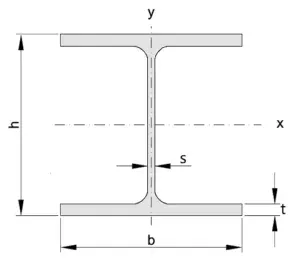 HEM Dimensions & Weights
| HEM Sizes EN 10034/10025 1/2 | Sizes in mm | Cross Section cm² | Modulus Section cm³ |
|---|---|---|---|
| HEM Beam Size | h | b | s |
| HEM 100 | 120 | 106 | 12 |
| HEM 120 | 140 | 126 | 12.5 |
| HEM 140 | 160 | 146 | 13 |
| HEM 160 | 180 | 166 | 14 |
| HEM 180 | 200 | 186 | 14.5 |
| HEM 200 | 220 | 206 | 15 |
| HEM 220 | 240 | 226 | 15.5 |
| HEM 240 | 270 | 248 | 18 |
| HEM 260 | 290 | 268 | 18 |
| HEM 280 | 310 | 288 | 18.5 |
| HEM 300 | 340 | 310 | 21 |
| HEM 320 | 359 | 309 | 21 |
| HEM 340 | 377 | 309 | 21 |
| HEM 360 | 395 | 308 | 21 |
| HEM 400 | 432 | 307 | 21 |
| HEM 450 | 478 | 307 | 21 |
| HEM 500 | 524 | 306 | 21 |
| HEM 550 | 572 | 306 | 21 |
| HEM 600 | 620 | 305 | 21 |
| HEM 650 | 668 | 305 | 21 |
| HEM 700 | 716 | 304 | 21 |
| HEM 800 | 814 | 303 | 21 |
| HEM 900 | 910 | 302 | 21 |
| HEM 1000 | 1008 | 302 | 21 |
HEM Beam Selection Criteria
Choosing HEM steel beams for a construction project involves considering several key factors that make these beams particularly suitable for certain applications. HEM beams, with their wide flanges and substantial depth, offer unique advantages:
| Selection Criteria | Description |
|---|---|
| High Load-Bearing Capacity | Designed to bear heavy loads without additional support columns; large cross-sectional area and reliable structure |
| Long Spans | Greater depth allows longer spans between supports; ideal for auditoriums, warehouses, and industrial buildings requiring open spaces |
| Durability & Structural Integrity | Substantial web and flange material withstands environmental stresses, vibrations, and factors that compromise less reliable beam types |
| Design Flexibility | Versatile for standard and innovative architectural designs; suitable for building frames, bridges, heavy machinery support |
| Aesthetic Appeal | Visually substantial and professional look; aligns with modern design trends favoring clean lines and open spaces |
| Cost-Efficiency | Long-term savings through reduced need for additional supports and maintenance; fewer materials needed for long spans |
| Structural Safety | Reliable support against loads; reduces risk of structural failure |
Conclusion
The decision to use HEM steel beams is driven by the need for high strength, long spans, durability, and versatility in construction projects. While the initial cost might be higher compared to other beam types, the long-term benefits of using HEM beams, including structural integrity, design flexibility, and cost savings, often justify the investment. Engineers and architects choose HEM beams for challenging projects where these factors are critical to the success and longevity of the structure.
Leave a Comment
Have a question or feedback? Send us a message.
Previous Comments
Dear Sir/Madam. Good day.I am a Ghana local agent. I want to know if your company will bid in a tender to supply your product to Ghana if you are successful, However, We will like to see your company catalog/website to help select the Require items If you are interested to participate then get back to enable us proceed. Awaiting for your prompt response, and have a nice day. In the mean time, I look forward to hearing from you by return of my mail & to developing a long term business partnership with you soon. Best regards.