

Plastic Pipes
Plastic Pipes For Oil & Gas and Industrial Projects
Definition: Plastic pipes are non-metallic piping products manufactured from thermoplastic or thermoset polymers. They provide complete corrosion immunity, weigh a fraction of steel equivalents, and serve applications from low-pressure utility water to high-pressure offshore process piping. The major families are thermoplastics (PVC, CPVC, HDPE, PP, PVDF, ABS, PEX) and thermoset composites (GRE, GRP, RTP).
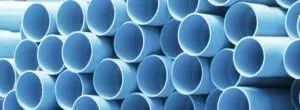 PVC pipes for drinking waterPlastic pipe shows up across every phase of oil and gas operations: gathering lines, gas distribution, water injection, and even crude transport in the right conditions. ASTM, ISO, and API have developed specific material grades for each polymer type to govern safety and performance in these services.
The global plastic pipe market spans municipal water, oil and gas, chemical processing, mining, marine, and building services. In the oil and gas sector, the driver for adopting plastic pipes is straightforward: corrosion accounts for roughly 25-30% of pipeline failures in carbon steel systems. Replacing steel with the right plastic pipe eliminates that failure mode entirely, while cutting installed weight by up to 90%.
Applications In Oil & Gas Projects
The table below maps each plastic pipe type to its typical oil and gas service. The sections that follow cover each material in detail.
| Plastic Pipe Material | Recommended Use in Oil & Gas Applications |
|---|---|
| HDPE (High-Density Polyethylene) | Saltwater disposal and injection lines, gas gathering systems, corrosion protection for steel pipelines |
| PVC (Polyvinyl Chloride) | Water supply lines, low-pressure chemical transport, utility and service applications |
| CPVC (Chlorinated Polyvinyl Chloride) | Chemical lines resistant to higher temperatures, hot and cold water systems, fire suppression systems |
| GRE/GRP (Glass-Reinforced Epoxy/Plastic) | High-pressure applications like production and injection lines, fire water systems, offshore risers, and umbilicals |
| PP (Polypropylene) | Corrosive fluid transport where higher temperature resistance is needed, chemical plant piping |
| PVDF (Polyvinylidene Fluoride) | Aggressive chemical service, ultra-pure water systems, semiconductor and pharmaceutical piping |
| ABS (Acrylonitrile Butadiene Styrene) | Drainage, waste, and vent systems; compressed air; instrument tubing |
| PEX (Cross-Linked Polyethylene) | Flexible tubing for control lines, hot and cold water plumbing within facilities |
| RTP (Reinforced Thermoplastic Pipe) | Flowlines, gathering lines, injection lines (spoolable for rapid field deployment) |
In upstream operations, HDPE dominates saltwater disposal lines and gas gathering systems. Its fusion-welded joints give you a leak-free system that handles the produced water chemistry without blinking. GRE/GRP handles the higher-pressure water injection duties and is the standard for firewater systems on offshore platforms. Midstream, HDPE serves as flowline material in corrosive environments and as internal liners that extend the life of existing steel pipelines. RTP competes strongly here for gathering networks where spoolable pipe cuts installation time dramatically. Downstream, CPVC and PVC handle low-pressure chemical transport and cooling water circuits in processing plants, while GRE/GRP and HDPE run the firewater systems. PP and PVDF handle the most aggressive chemical services in refinery and petrochemical settings. For offshore platforms, GRE/GRP composite pipes handle risers, umbilicals, and seawater services where their strength-to-weight ratio pays for itself quickly.
Material Properties Comparison
The following table compares the key engineering properties of all major plastic pipe materials. Use this as a first-pass screening tool before moving to detailed material selection.
| Property | PVC | CPVC | HDPE | PP | PVDF | GRE/GRP | ABS | PEX |
|---|---|---|---|---|---|---|---|---|
| Max temp (°C) | 60 | 93 | 60 | 100 | 150 | 130 | 80 | 95 |
| Min temp (°C) | 0 | 0 | -40 | 0 | -30 | -40 | -40 | -40 |
| Max pressure (bar, typical) | 15 | 15 | 25 | 16 | 16 | 240 | 10 | 12 |
| Density (g/cm3) | 1.40 | 1.56 | 0.95 | 0.91 | 1.78 | 1.8-2.0 | 1.05 | 0.94 |
| Chemical resistance | Good | Very Good | Good | Very Good | Excellent | Excellent | Moderate | Good |
| Hydrocarbon resistance | Poor | Poor | Poor | Fair | Good | Excellent | Poor | Poor |
| UV resistance | Poor | Poor | Poor | Poor | Good | Good | Moderate | Poor |
| Fire rating | Self-extinguishing | Self-extinguishing | Burns | Burns | Self-extinguishing | Burns (fire grades available) | Burns | Burns |
| Relative cost | Low | Medium | Low | Medium | High | High | Low | Medium |
Key Types Of Plastic Pipes
HDPE (High-Density Polyethylene)
HDPE pipe is the workhorse of the non-metallic piping world. It resists environmental stress cracking, handles a wide chemical range, and its butt-fusion joints produce a monolithic, leak-free system with no gaskets, no bolts, and no corrosion at the joint. That fusion joint is what really sets HDPE apart from other plastic pipes.
HDPE works underground (directional drilling, seismic zones) and above ground, though above-ground runs need UV-stabilized grades or protective wrapping. The material flexes without fracturing, which is why it tolerates ground movement that would crack rigid pipe. PE100 (MRS 10.0 MPa) is the current standard grade, with PE4710 as the North American equivalent per ASTM D3350.
Key Standards for HDPE Pipes
| Standard | Scope |
|---|---|
| ASTM D3035 | PE pipe (DR-PR) based on controlled OD; water supply and pressure services |
| ASTM F714 | PE pipe (DR-PR) based on OD; includes larger diameters |
| ASTM D3350 | Material classification and grading for PE pipe and fittings |
| ASTM F2619/F2619M | HDPE line pipe for oil, gas, and non-potable water conveyance |
| API Spec 15LE | PE line pipe for oil and gas; manufacturing, dimensions, QC |
| ISO 4427 | PE pipes for water supply (international standard) |
HDPE pipe handles potable water, wastewater, gas distribution, gathering lines, water injection, slurry transport in mining, and marine intake/outfall systems. Its abrasion resistance makes it the go-to choice for slurry and dredging lines where steel pipe erodes quickly.
PVC (Polyvinyl Chloride)
PVC pipe is the cheapest and most common plastic pipe in existence. It handles water supply, sewage, irrigation, and low-pressure chemical services. In oil and gas, PVC is restricted to utility and support services (potable water, drainage, low-pressure chemical transport) because its pressure and temperature ratings sit well below HDPE and GRE.
PVC’s main limitation is temperature: it softens above about 60°C (140°F), and its impact strength drops significantly in cold weather. For anything involving heat, look at CPVC instead.
Key Standards for PVC Pipes
| Standard | Scope |
|---|---|
| ASTM D1785 | PVC pipe, Schedules 40, 80, and 120; pressure applications |
| ASTM D2241 | PVC pressure-rated pipe (SDR Series); dimensions and ratings |
| ASTM D2665 | PVC drain, waste, and vent (DWV) pipe and fittings |
| ASTM D3034 | PVC sewer pipe and fittings |
Neither API nor American Standard publishes PVC-specific standards. American Standard building service codes reference the ASTM specifications above.
Common applications include municipal water supply, sanitary and storm sewers, agricultural irrigation, building plumbing and DWV systems, and low-pressure chemical waste lines in plant settings.
CPVC (Chlorinated Polyvinyl Chloride)
CPVC is PVC with extra chlorine atoms bonded to the polymer chain, which pushes the maximum service temperature from about 60°C up to roughly 93°C (200°F). That single improvement opens up hot water systems, fire sprinkler lines, and industrial chemical services that regular PVC cannot handle.
CPVC also has inherent flame retardancy and low thermal conductivity (the pipe stays cool to the touch even with hot fluid inside). It cements together with solvent welding, which is fast, cheap, and needs no fusion equipment. For a detailed comparison, see PVC vs CPVC pipe.
Key Standards for CPVC Pipes
| Standard | Scope |
|---|---|
| ASTM F441/F441M | CPVC pipe, Schedules 40 and 80; hot/cold water distribution |
| ASTM D2846 | CPVC hot- and cold-water distribution systems (pipe and fittings) |
| ASTM F438 | Socket-type CPVC fittings, Schedule 40 |
| ASTM F439 | CPVC fittings, Schedule 80; higher-pressure services |
API does not cover CPVC. American Standard plumbing and building service codes reference the ASTM standards above.
Typical CPVC applications include hot and cold water distribution, fire sprinkler systems, corrosive chemical transport in industrial plants, and HVAC condensate and cooling tower lines.
GRE/GRP (Glass-Reinforced Epoxy/Plastic)
GRE and GRP pipes are composites: glass fibers wound into a resin matrix (epoxy for GRE, polyester or vinyl ester for GRP). The result is a pipe with the corrosion resistance of plastic and the pressure capability that approaches steel, at a fraction of the weight. On offshore platforms, the weight savings alone justify the cost. For a deeper look at GRE, see What is GRE Pipe?
These are rigid, brittle pipes that do not flex like HDPE. They require careful handling, proper support spacing, and controlled torque on flanged connections. But when installed correctly, GRE/GRP systems run for decades in services that would destroy carbon steel.
Key Standards for GRE/GRP Pipes
| Standard | Scope |
|---|---|
| ISO 14692 (Parts 1-4) | GRP/GRE piping for petroleum and natural gas industries; design, qualification, fabrication, installation |
| ASTM D2996 | Filament-wound fiberglass pipe; manufacturing and testing for pressure service |
| ASTM D3517 | Fiberglass pressure pipe; dimensions, quality, testing |
| ASTM D3754 | Fiberglass sewer and industrial pipe; gravity flow and pressure |
| American Standard NM.2 | Design, construction, testing, and maintenance of GFR thermosetting-resin piping systems |
| API 15HR | High-pressure fiberglass line pipe |
Difference between GRP vs. GRE Pipes
The practical difference between GRE and GRP comes down to the resin matrix, and that choice drives cost, chemical resistance, and temperature capability.
| Feature | GRE Pipes | GRP Pipes |
|---|---|---|
| Resin Matrix | Epoxy resin, providing excellent mechanical properties, chemical resistance, and temperature tolerance. Suitable for high-pressure and high-temperature applications. | Polyester or vinyl ester resin. Polyester offers good mechanical properties and cost-effectiveness. Vinyl ester provides better chemical resistance for more corrosive environments. |
| Applications | Demanding industrial applications: offshore platforms, chemical processing plants, power generation facilities, handling corrosive fluids at high temperatures. | Less aggressive environments: potable water supply, irrigation systems, sewage lines, drainage systems. Generally at lower temperatures and pressures. |
| Cost | More expensive due to epoxy resin. Cost is offset by enhanced performance and longer service life in harsh environments. | Lower upfront costs due to polyester resins. Cost-effective for civil and municipal applications, but limited by mechanical and chemical resistance properties. |
| Installation | Lightweight and easy to install compared to traditional materials. | Lightweight and easy to install compared to traditional materials. Handling and installation practices may differ slightly due to different mechanical properties. |
PP (Polypropylene)
PP (polypropylene) pipe occupies a niche between PVC and CPVC in terms of temperature capability, but with broader chemical resistance than either. PP handles temperatures up to about 100°C (212°F) and resists most acids, alkalis, and organic solvents. It is the default choice in European chemical plants for aggressive chemical transport, and it sees growing use in desalination and wastewater treatment.
PP joints are made by socket fusion or butt fusion (similar to HDPE), producing strong, leak-free connections. PP-R (random copolymer) is the most common grade for pressure piping, while PP-H (homopolymer) offers higher stiffness for chemical drainage.
Key Standards for PP Pipes
| Standard | Scope |
|---|---|
| ASTM F2389 | Pressure-rated PP piping systems; water distribution and industrial |
| ISO 15494 | Plastics piping for industrial applications (PP, PB, and PVDF) |
| EN 15874 | PP-R pipes for hot and cold water |
API and American Standard do not publish PP-specific standards. American Standard process piping codes may reference ASTM F2389 for material selection.
PP pipe serves chemical processing plants (acid and alkali transport), desalination and wastewater treatment, building plumbing, and industrial air/gas distribution and pneumatic conveying systems.
PVDF (Polyvinylidene Fluoride)
PVDF is the high-performance thermoplastic of the plastic pipe family. It handles the most aggressive chemicals (concentrated acids, strong oxidizers, chlorinated solvents) at temperatures up to 150°C (302°F). PVDF also has the best UV resistance of any thermoplastic pipe material and is inherently flame-retardant.
In oil and gas, PVDF appears in chemical injection lines, ultra-pure water systems in refineries, and aggressive chemical services where no other plastic pipe can survive. In the semiconductor and pharmaceutical industries, PVDF piping is the standard for ultra-pure water (UPW) distribution due to its extremely low extractables.
Key Standards for PVDF Pipes
| Standard | Scope |
|---|---|
| ASTM D3222 | PVDF molding and extrusion materials |
| ISO 15494 | Plastics piping for industrial applications (PP, PB, and PVDF) |
| ASTM F1673 | PVDF corrosive waste drainage systems |
PVDF pipe is joined by butt fusion, socket fusion, or IR (infrared) welding for high-purity systems. The equipment is similar to HDPE fusion machines but calibrated for PVDF’s higher melting point.
ABS (Acrylonitrile Butadiene Styrene)
ABS pipe is a rigid thermoplastic with good impact resistance, even at low temperatures, a property that distinguishes it from PVC, which becomes brittle in cold weather. ABS handles temperatures from -40°C to 80°C and resists dilute acids, alkalis, and many industrial chemicals.
On oil and gas facilities, ABS serves primarily in drainage, waste, and vent (DWV) systems, compressed air lines, and instrument tubing. It is not suitable for hydrocarbon service or high-pressure process piping. ABS joints are made with solvent cement, similar to PVC.
Key Standards for ABS Pipes
| Standard | Scope |
|---|---|
| ASTM D2661 | ABS DWV pipe and fittings |
| ASTM D1527 | ABS Schedule 40 pipe |
| ASTM D2282 | ABS SDR pipe |
PEX (Cross-Linked Polyethylene)
PEX (cross-linked polyethylene) is regular PE that has been chemically or physically cross-linked to create bonds between polymer chains. This cross-linking gives PEX better temperature resistance and creep performance than standard PE, while retaining the flexibility that makes it easy to route through tight spaces.
Within oil and gas facilities, PEX appears in building plumbing, chemical injection tubing, and control lines, not in mainline process piping. Its real strength is in building services where its flexibility eliminates fittings and reduces leak points.
Key Standards for PEX Pipes
| Standard | Scope |
|---|---|
| ASTM F876/F876M | PEX tubing for hot and cold water distribution |
| ASTM F877/F877M | PEX hot- and cold-water distribution systems (fittings, joints, installation) |
| ASTM F1960 | Cold expansion fittings with PEX reinforcing rings |
No API or American Standards cover PEX directly. American Standard plumbing codes reference the ASTM specifications.
PEX handles residential and commercial plumbing, radiant floor heating, hydronic heating systems, snow-melting systems, and chilled water circuits in HVAC systems.
Polyamide 11 (PA11) And Polyamide 12 (PA12)
PA11 and PA12 are engineering-grade thermoplastics, tougher and more flexible than most other plastic pipe materials, with excellent resistance to hydrocarbons, H2S, and CO2. PA11 is derived from castor oil (a renewable source), while PA12 comes from petroleum feedstock. Both handle temperatures up to about 80-100°C depending on pressure.
In oil and gas, PA11 and PA12 show up as flexible fuel lines, umbilical tubing, chemical injection lines, and as the inner liner in flexible composite pipe (TCP/RTP) systems. They are also the standard material for automotive fuel lines and brake lines, and for aircraft hydraulic and pneumatic tubing.
Key Standards for PA11 and PA12
No ASTM, API, or American Standards are written specifically for PA11/PA12 piping. Material testing follows general plastics standards such as ASTM D638 (tensile properties). In oil and gas applications, PA11/PA12 performance requirements are typically specified by the flexible pipe manufacturer or defined in project-specific specifications referencing API 17J (flexible pipe) or similar.
Reinforced Thermoplastic Pipes (RTP)
RTP (reinforced thermoplastic pipe) wraps high-strength fibers (aramid, glass, or carbon) around a thermoplastic liner (typically HDPE or PA11/PA12), then adds a protective outer jacket. The fiber reinforcement gives RTP pressure ratings that compete with steel, while the thermoplastic liner provides full corrosion resistance. RTP ships on spools, which means long continuous lengths with no field welds, a major advantage for gathering lines and flowlines in remote locations.
Key Standards for RTP
| Standard | Scope |
|---|---|
| ASTM D2996 | Filament-wound fiberglass pipe (provides design guidance applicable to RTP) |
| ASTM D2992 | Hydrostatic design basis for fiberglass pipe and fittings (applicable to RTP qualification) |
| API 17J | Flexible pipe (covers bonded and unbonded flexible pipe systems including RTP concepts) |
No dedicated ASTM, API, or American Standard exists solely for RTP. Most RTP manufacturers qualify their products through ASTM D2992 long-term hydrostatic testing and follow API guidelines for flexible pipe systems.
RTP pipe serves oil and gas flowlines, gathering lines, injection lines, water distribution, sewage conveyance, desalination plants, chemical process piping, and marine/offshore seawater systems. Its spool-based installation makes it particularly effective for onshore gathering networks where rapid deployment across long distances matters.
Joining Methods For Plastic Pipes
The joining method is as critical as the pipe material itself. A mismatched or poorly executed joint is the most common cause of plastic pipe failures. The table below summarizes the primary joining methods by material.
| Material | Primary Joining Method | Secondary Methods | Key Requirement |
|---|---|---|---|
| HDPE | Butt fusion (ISO 21307) | Electrofusion, flange adapters | Temperature, pressure, and time control per pipe grade |
| PVC | Solvent cement (ASTM D2564) | Gasketed bell-and-spigot, threaded | Correct primer and cement; cure time before pressurizing |
| CPVC | CPVC-specific solvent cement | Flanged, threaded | Never use PVC cement on CPVC (different chemistry) |
| GRE/GRP | Adhesive bonded taper joint | Butt-and-strap laminate, flanged with steel backing ring | Trained installers; cure above 15°C; dry surfaces |
| PP | Socket fusion | Butt fusion, electrofusion, flanged | Fusion temperature calibrated to PP grade |
| PVDF | Butt fusion | Socket fusion, IR welding (high purity) | Higher melt temp than HDPE; do not use HDPE parameters |
| ABS | Solvent cement (ASTM D2235) | Threaded, flanged | ABS-specific cement; not interchangeable with PVC cement |
| PEX | Crimp/clamp fittings | Cold expansion with reinforcing ring | Mechanical joints only; PEX cannot be solvent-cemented or fusion-welded |
| RTP | Manufacturer-specific mechanical connectors | Flanged end fittings | Follow manufacturer’s assembly procedure exactly |
Standards Reference
The following table consolidates the major national and international standards governing plastic pipe design, manufacturing, and testing across all material types.
| Standard | Material | Scope |
|---|---|---|
| ASTM D1785 | PVC | PVC pipe, Schedules 40, 80, 120; pressure applications |
| ASTM D2241 | PVC | PVC pressure-rated pipe, SDR Series |
| ASTM D3035 | PE/HDPE | PE pipe, DR-PR based on controlled OD |
| ASTM F714 | PE/HDPE | PE pipe, large diameter (DR-PR based on OD) |
| ASTM D3350 | PE/HDPE | Material classification for PE pipe and fittings |
| ASTM F2619 | HDPE | HDPE line pipe for oil, gas, non-potable water |
| ASTM F441 | CPVC | CPVC pipe, Schedules 40 and 80 |
| ASTM D2846 | CPVC | CPVC hot/cold water distribution systems |
| ASTM F2389 | PP | Pressure-rated PP piping systems |
| ASTM D2661 | ABS | ABS DWV pipe and fittings |
| ASTM D3222 | PVDF | PVDF molding and extrusion materials |
| ASTM F876 | PEX | PEX tubing for hot and cold water |
| ASTM D2513 | PE | PE gas pressure pipe; key gas distribution standard |
| ASTM D2996 | GRP/RTP | Filament-wound fiberglass pipe |
| ISO 14692 (Parts 1-4) | GRP/GRE | GRP piping for petroleum and natural gas industries |
| ISO 15494 | PP/PVDF | Plastics piping for industrial applications |
| ISO 4427 | PE | PE pipes for water supply |
| API Spec 15LE | PE | PE line pipe for oil and gas |
| API 15HR | GRP | High-pressure fiberglass line pipe |
| API 17J | RTP/Flexible | Flexible pipe systems |
| American Standard NM.2 | GRP/GRE | Glass-fiber-reinforced thermosetting-resin piping systems |
| American Standard B31.3 | All | Process piping; references ASTM/API specs for non-metallic materials |
ISO 14692: GRP/GRE Piping For Oil & Gas
ISO 14692 deserves special attention because it is the controlling standard for GRP/GRE piping systems in the petroleum and natural gas industries, both onshore and offshore. Major operators (Shell, BP, TotalEnergies, Saudi Aramco, ADNOC) specify ISO 14692 compliance as a baseline for all GRP/GRE piping installations.
Structure of ISO 14692
| Part | Title | Scope |
|---|---|---|
| Part 1 | General | Vocabulary, symbols, applications, system overview |
| Part 2 | Qualification and Manufacture | Long-term regression testing (10,000+ hours), quality control, marking |
| Part 3 | System Design | Design methodology, pressure-temperature envelopes, stress analysis, support spacing |
| Part 4 | Fabrication, Installation, and Operation | Joint making, testing, commissioning, inspection, repair |
Key Concepts in ISO 14692
Qualification-based design: Unlike steel piping where allowable stress is derived from published material properties, GRP/GRE design under ISO 14692 requires each manufacturer to qualify their specific product through long-term hydrostatic regression testing. The resulting pressure-temperature envelope is unique to that manufacturer and product family. This means you cannot substitute one manufacturer’s GRP pipe for another without re-verifying the qualification data.
Survival and design conditions: ISO 14692 distinguishes between the design envelope (continuous operating conditions) and the survival envelope (short-term excursions such as pressure surges or fire exposure). Fire-rated systems must demonstrate structural integrity under the survival fire case, typically requiring intumescent coatings or fire-resistant resin systems.
Part factors: The standard uses partial safety factors applied to loads and resistance (similar to limit-state design in structural engineering). These factors account for manufacturing variability, environmental aging, cyclic loading, and temperature effects.
Offshore Applications of GRP/GRE
On offshore platforms, GRP/GRE piping systems commonly serve:
- Firewater mains and deluge systems: fire-rated GRE with intumescent coating
- Seawater cooling: GRE resists chloride-induced corrosion that destroys carbon steel and even some stainless grades
- Produced water: after separation, produced water lines benefit from GRE’s corrosion immunity
- Ballast and bilge water: GRE handles the mixed seawater/oil environment
- Chemical injection: small-bore GRE for corrosion inhibitor and scale inhibitor lines
- Oily drain and sewer: GRE resists the hydrocarbon exposure that degrades HDPE
The weight savings are substantial: a typical NPS 6 GRE pipe weighs about 5 kg/m compared to 28 kg/m for carbon steel of similar rating. On an offshore platform where topside weight directly affects structural steel cost and vessel stability, this difference translates to significant CAPEX reduction.
Advantages Of Plastic Pipes Over Steel
Corrosion immunity: Plastic pipes do not rust, pit, or suffer galvanic or microbiologically induced corrosion. No cathodic protection, no corrosion inhibitors, no corrosion allowance in wall thickness design.
Weight reduction: HDPE weighs approximately 1/8 of carbon steel; GRE weighs approximately 1/5. This reduces crane loads, support steel, and foundation costs.
Lower lifecycle cost: Despite sometimes higher material cost (for GRE), the total installed cost is often lower when you factor in eliminated coating, wrapping, cathodic protection, and reduced maintenance.
Longer design life: HDPE systems are routinely designed for 50-100 year service life in water applications. GRE systems typically achieve 20-25 years with potential for life extension.
Smoother bore: Plastic pipes maintain a smooth internal surface throughout their service life (Hazen-Williams C=150 for GRE vs. 100-120 for aged steel). This means lower pumping energy costs and no flow reduction from internal scaling.
Faster installation: Lighter weight means smaller crews and lighter equipment. HDPE butt fusion is faster than steel welding. RTP installs directly from a spool with no field welding at all.
Chemical resistance: Each plastic type offers inherent resistance to specific chemical families, eliminating the need for internal lining or cladding.
Limitations Of Plastic Pipes
Every plastic pipe material has constraints that must be respected during design. Ignoring these limits leads to premature failures.
Temperature limits: All thermoplastic pipes lose strength as temperature increases, requiring pressure deration. GRE/GRP has the highest ceiling at 130°C, but even this falls well short of carbon steel’s capability. Service above the rated temperature causes creep, deformation, and eventual failure.
Pressure limits: While GRE/GRP can reach 240 bar in small diameters, most thermoplastic pipes are limited to 16-25 bar. For high-pressure process piping (Class 300 and above), steel remains the only practical choice.
UV degradation: HDPE, PVC, CPVC, PP, and PEX all degrade under prolonged UV exposure. Above-ground installations require UV-stabilized grades or protective wrapping. Only PVDF and GRE offer inherent UV resistance.
Fire performance: Most plastic pipes will burn or lose structural integrity in a fire. PVC and CPVC are self-extinguishing but release toxic hydrogen chloride gas. GRE/GRP requires fire-rated resin systems with intumescent coatings for fire case survival. Fire codes may restrict plastic pipe use in certain building and platform zones.
Impact sensitivity: GRE/GRP pipes are brittle and crack under impact. HDPE is tough but can be gouged by rocks during backfill. ABS has good impact resistance at low temperatures, but PVC becomes brittle below 0°C.
Creep: All thermoplastic pipes exhibit time-dependent deformation under sustained load (creep). Long-term pressure ratings account for this, but the design must use the 50-year HDB (hydrostatic design basis), not short-term burst strength.
Permeation: HDPE and other polyolefin pipes can absorb and transmit certain chemicals (particularly solvents and hydrocarbons) through the pipe wall. This is a critical concern for potable water pipes routed through contaminated soil.
Selection Guide By Application
Choosing the right plastic pipe requires matching the material to the service conditions. The following guide provides a starting point based on common oil and gas and industrial applications.
| Application | Recommended Material | Why |
|---|---|---|
| Produced water (post-separation) | GRE or HDPE | GRE for higher pressure/temp; HDPE for lower pressure water-only service |
| Water injection (high pressure) | GRE | Handles high pressure + full corrosion resistance |
| Gas gathering (low-pressure, onshore) | HDPE or RTP | Fusion joints (HDPE) or spoolable (RTP) for rapid deployment |
| Firewater systems (offshore) | GRE (fire-rated) | ISO 14692 qualified with intumescent coating for fire survival |
| Seawater cooling | GRE | Immune to chloride corrosion that attacks even duplex stainless |
| Chemical injection (aggressive) | PVDF or GRE | PVDF for concentrated acids; GRE for broader chemical service |
| Utility water (potable, service) | PVC or HDPE | PVC for low cost/low pressure; HDPE for higher pressure or buried service |
| Hot water distribution | CPVC or PP | CPVC to 93°C; PP to 100°C |
| Drainage, waste, vent | PVC or ABS | PVC for general use; ABS for cold-climate installations |
| Chemical plant acid/alkali lines | PP or PVDF | PP to 100°C; PVDF for higher temps and more aggressive chemicals |
| Flowlines and gathering (remote) | RTP | Spoolable, rapid deployment, no field welding |
| Building plumbing (hot/cold) | PEX or CPVC | PEX for flexibility; CPVC for higher pressure |
Frequently Asked Questions
What are the main types of plastic pipes used in oil and gas?
The main types are HDPE (water injection, gas gathering), GRE/GRP (high-pressure offshore and onshore process piping per ISO 14692), PVC/CPVC (low-pressure utility and chemical services), PP (chemical transport), PVDF (aggressive chemicals, ultra-pure water), PEX (chemical injection tubing), ABS (drainage and vent), and RTP (reinforced thermoplastic for flowlines). Selection depends on pressure, temperature, chemical compatibility, and whether the service involves hydrocarbons.
What is the maximum temperature and pressure for plastic pipes?
Temperature and pressure limits vary by material. PVC handles up to 60°C at low pressure. CPVC reaches 93°C. HDPE is rated to 60°C continuous at up to 25 bar (PE100 SDR 7.4). GRE/GRP pipes handle up to 130°C at pressures up to 240 bar in small diameters. PVDF can reach 150°C. PP handles up to 100°C. All plastic pipes lose pressure capacity as temperature increases, requiring deration factors per the applicable standard.
What is ISO 14692 and why is it important for GRP/GRE piping?
ISO 14692 is the international standard governing GRP (glass-reinforced plastic) piping systems for the petroleum and natural gas industries. It covers design, fabrication, testing, and installation of GRE and GRP pipe systems in four parts. ISO 14692 uses a qualification-based approach requiring manufacturers to demonstrate long-term performance through 10,000+ hour regression testing. The qualified pressure and temperature envelope is specific to each manufacturer and product family. It is the controlling standard for GRP/GRE piping on offshore platforms and onshore oil and gas facilities worldwide.
How are plastic pipes joined?
Joining methods depend on the material. HDPE uses butt fusion and electrofusion to create monolithic leak-free joints. PVC and CPVC use solvent cement welding (each requires its own specific cement). GRE/GRP uses adhesive-bonded taper joints or flanged connections with steel backing rings. PP and PVDF use socket fusion or butt fusion. PEX uses mechanical crimp, clamp, or cold-expansion fittings. Each method requires trained installers and strict compliance with manufacturer procedures and applicable standards (e.g., ISO 21307 for HDPE fusion).
What are the advantages of plastic pipes over steel pipes?
Plastic pipes offer complete immunity to electrochemical corrosion (no rust, no pitting, no cathodic protection needed), significantly lower weight (HDPE is 1/8 the weight of steel), lower installed cost for many services, longer design life in corrosive environments (50-100 years for HDPE vs. 20-30 years for unprotected steel), smoother internal surface reducing friction losses (Hazen-Williams C=150 vs. 100-120 for aged steel), and faster installation. However, plastic pipes have lower pressure and temperature limits than steel and require careful UV protection for above-ground installations.
Leave a Comment
Have a question or feedback? Send us a message.